 Cape Town City Guide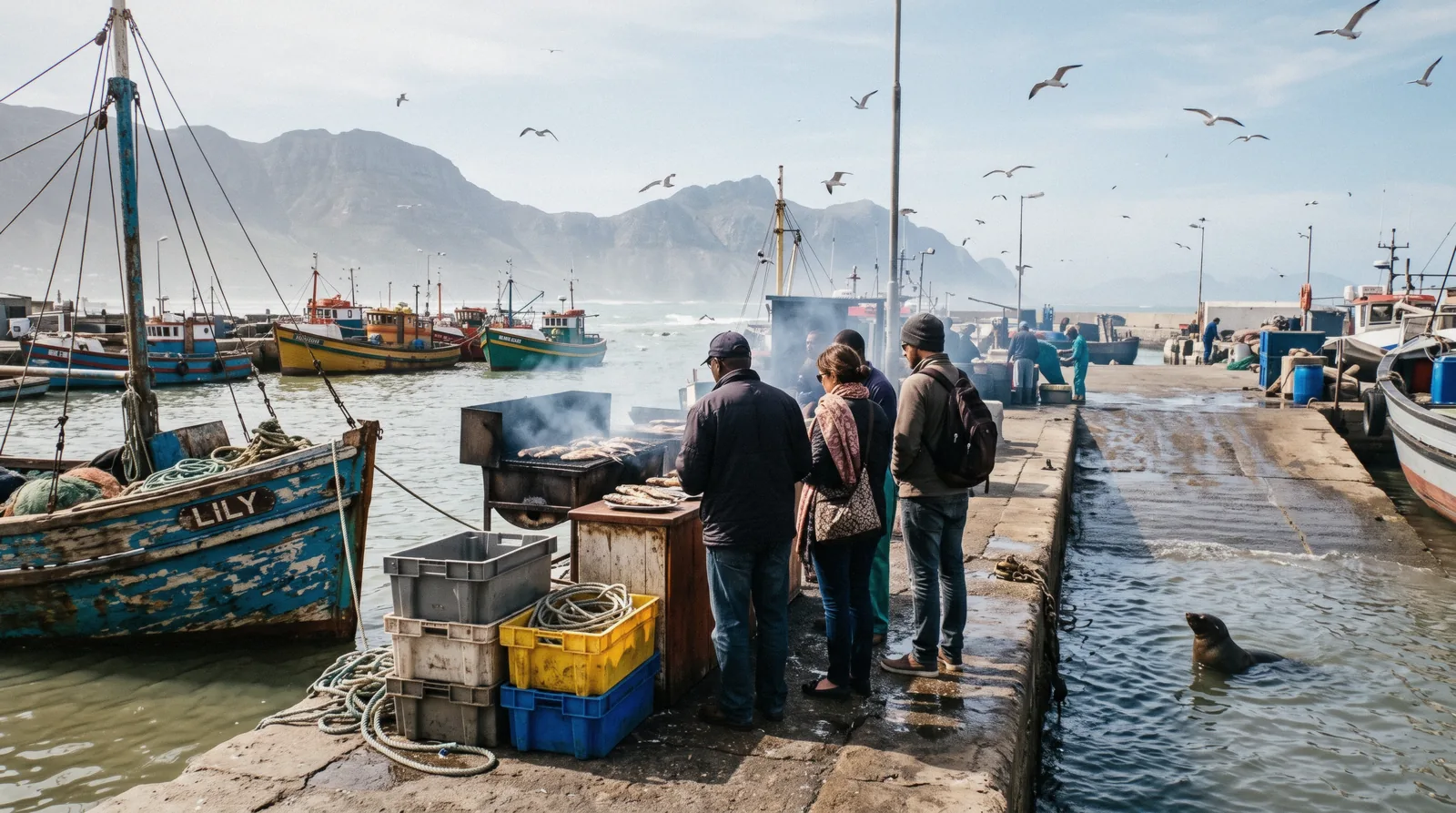
Cape Town Restaurants & Food, Street by Street
Most pages about Cape Town restaurants are a list of names that will be half wrong within a year. This one is built the way the rest of the Cape Town city guide is built: from what can be sourced and what lasts. What lasts is the map — this city's food is organised by geography, and once you know which dish lives on which street, you can eat superbly here for a decade without a single listicle. Cape Malay cooking lives in the Bo-Kaap, where it was created; harbour fish belongs to Kalk Bay and Hout Bay, metres from the boats that landed it; the long wine-estate lunch is Constantia's native format; the bistro rows run along Kloof and Bree Streets in the City Bowl; and Saturday morning belongs to the markets, led by Oranjezicht. Where this page does print names, it plays by the house rule: a venue appears only when a citable authority names it first — and since Michelin publishes no South African guide at all, the citable authority here is the national Eat Out awards, whose 2025 list is quoted with its year, alongside facts from each venue's own site. Prices are dollar-first at R1,000 ≈ $62.13; where nothing official states a figure, we say "not stated" and mean it.
Quick answer The dish-to-street map, the sourced award tables, and the bill decoded
Eat Cape Town by geography, not by listicle: Cape Malay curries and koesisters in the Bo-Kaap where the cuisine was born, fish beside the boats at Kalk Bay and Hout Bay harbours, a long estate lunch under Constantia's oaks, the Kloof and Bree Street bistro rows for the city's everyday cooking, and Saturday morning at the Oranjezicht market. The awarded tier is real and absurdly good value in dollars — the 2025 Eat Out awards' top tables cluster here, with tasting menus from $105.30 (R1,695) — and the bill culture is simple: card everywhere, tip 10–15%.
Key takeaways
- The dish-to-street map is the page's engine — five food territories, each linking to its own full guide page.
- Names, where we can source them: the awarded tables quotes the 2025 Eat Out national awards (Michelin runs no SA guide) with each venue's own printed facts beside it.
- The bill culture is friendly — card-first, tap water safe and free, 10–15% tip — with the full money detail on the costs page.
- Eating with a guide beats reading about it: the Essential Food & Drink walk is $141.73 with 10+ tastings, and the African dinner with djembe drumming is the best first-night icebreaker in town at $62.
What Cape Town Actually Eats
The vocabulary first, because the menus assume it. These are the dishes that belong to this city and coast — Cape Malay cooking is the tradition the Bo-Kaap's kitchens carry, and the fish column follows the boats. Descriptions are ours; no register certifies these the way Europe certifies its dishes, and the honest sourcing is the neighbourhood itself.
Read the last column as routing: every dish on this table has a street where it is at home, and eating it there is the whole method of this page.
| Dish | What it is | Where it lives |
|---|---|---|
| Bobotie | The Cape Malay signature: spiced minced meat baked under a savoury egg custard, sweetened with dried fruit, served with yellow rice | Bo-Kaap home kitchens and Cape Malay restaurants; also the safest 'try one local classic' order citywide |
| Cape Malay curry | Aromatic rather than fire-hot — cinnamon, cardamom, turmeric — the cooking a community built from Southeast Asian roots over three centuries | The Bo-Kaap, definitively; cooking classes there teach it in home kitchens |
| Koesisters | The Cape Malay Sunday-morning pastry: spiced, syrup-soaked, coconut-dusted — softer and spicier than the plaited Afrikaans koeksister, one letter and a world apart | Bo-Kaap corner shops on weekend mornings, while they last |
| Snoek | The Cape's own game fish, best braaied (grilled over wood) and traditionally glazed with apricot jam — smoked snoek pâté is the gateway format | Hout Bay harbour and the False Bay villages; roadside braai stands in season |
| Fish and chips, harbour grade | Yesterday's cliché, today's catch: hake or snoek fried beside the boats that landed it | Kalk Bay harbour, eaten off paper defending against seals and gulls |
| The Gatsby | Cape Town's own foot-long: a whole loaf split and packed with chips plus masala steak or polony — one feeds two or three, and ordering one alone is a statement | Athlone and the Cape Flats born it; takeaways citywide sell it. A working-class icon, not a gourmet item, and better for it |
| Braai / boerewors | The national institution: wood-fire grilling as social contract, with coiled spiced boerewors sausage its flag | Everywhere South Africans gather; for visitors, the African dinner formats and estate braais are the open door |
| Biltong & droëwors | Air-dried spiced meat — beef or game — the national snack, sold by weight | Butchers, markets and dedicated counters; buy 100 g and understand the country better |
| Malva pudding | Warm apricot-tinged sponge drowned in cream sauce — the dessert every grandmother's version of is the best version of | Traditional menus citywide; non-negotiable in winter |
| Constantia wine | The city grows its own: the Constantia valley has made wine since 1685, and its sweet Vin de Constance once supplied Europe's courts | The estates themselves — tastings from $8.08 (R130) at Groot Constantia, per the estate's own listing |
The honest exclusion
One honest exclusion: bunny chow — curry served in a hollowed bread loaf — is Durban's dish, not Cape Town's, and ordering it here is like demanding deep-dish pizza in Rome. You will find it; it is not of this place. The local equivalent of that working-class genius is the Gatsby, and the local pride is Cape Malay cooking — the Bo-Kaap page carries its history properly.
The Dish-to-Street Map: Five Food Territories
This is the hub's engine: each territory below is a place this site covers in full, with its food role stated here and the practical detail — hours, history, how to get there — one click deeper. Eat by territory and the city organises itself.
The Cape Malay quarter
-
Bo-Kaap
Neighbourhood cooking
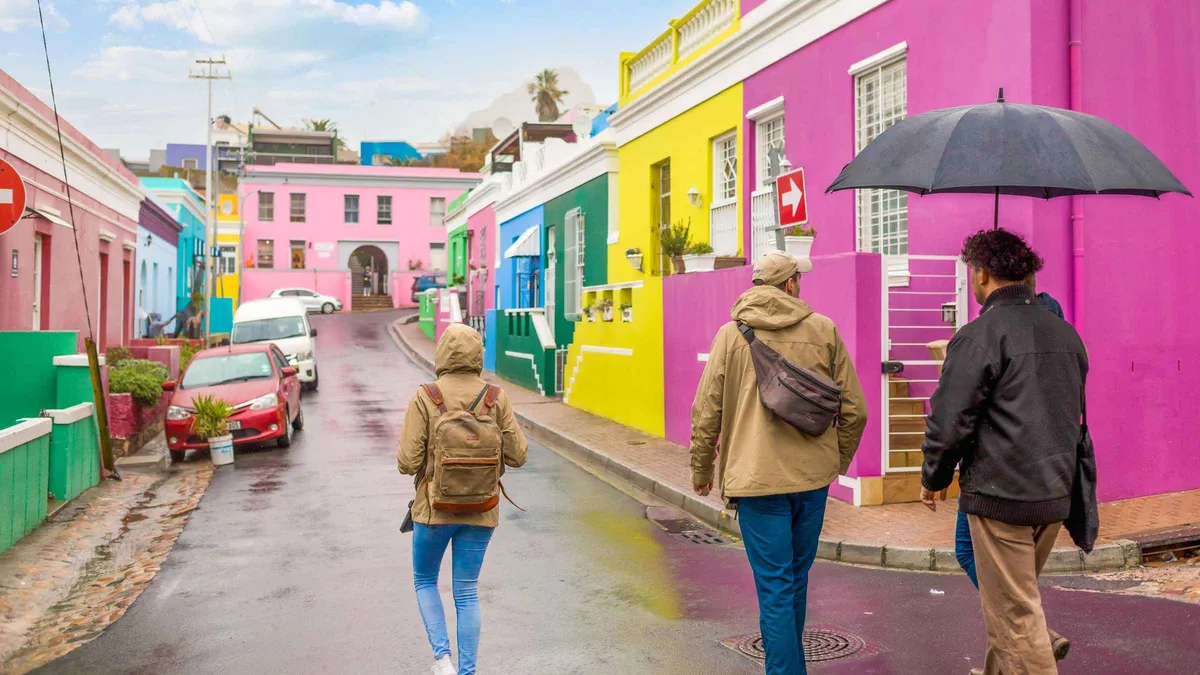
The birthplace and living home of Cape Malay cuisine: curries built on three centuries of spice-route history, koesisters on weekend mornings, cooking classes in home kitchens. Eat here at lunch, with respect — it is a neighbourhood first.
Tip: A guided walk that starts here, like the Bo-Kaap city walk, ends at exactly the right counters.
The fish harbours
-
Kalk Bay
Harbour fish & chips
The working harbour where fish and chips means the morning's catch, eaten off paper between fishing boats, seals and opportunist gulls. The village behind it stacks antique shops and cafés for afterwards.
Tip: Go for a late lunch after the boats have sold their morning landing.
-
Hout Bay
Snoek & harbour market
The Atlantic side's fishing harbour: braaied snoek territory, a weekend harbour market, and the fried-fish counters that fuel the Chapman's Peak circuit when the drive is open.
Tip: Smoked snoek pâté is the take-home that survives the flight home in memory only — eat it there.
The estate lunch
-
Groot Constantia
Wine estate dining
The oldest wine estate in the country (1685) and the template of the Cape's native meal format: a tasting from $8.08 (R130) per the estate's own listing, then a long lunch under the oaks. Twenty minutes from town, a world away in pace.
Tip: The Visitors Route at $9.63 (R155) bundles the manor house, cellar tour and tasting — the full afternoon for less than a city museum pair.
-
Stellenbosch
Winelands dining town
The university-and-vineyards town forty minutes out, where estate restaurants and tasting rooms stack deeper than anywhere in the southern hemisphere — the full-day version of what Constantia does in an afternoon.
Tip: Tastings run roughly R55–R450 by estate; the day-trip page prices the honest ways in, including who drives.
-
Franschhoek
The food-capital day
The valley that styles itself the country's food capital, toured by its wine tram — $21.70 (R350) hop-on hop-off on the tram's own tariff, tastings extra at R60–R260 per estate.
Tip: Book the tram line, not just the day — lines alternate in winter.
Market Saturdays
-
Oranjezicht City Farm Market
The Saturday institution
The city's benchmark food market, entry free: Saturday 08:00–14:30 and Sunday 08:30–14:30 by its own published hours, farm stalls plus a prepared-food hall that solves breakfast, lunch and the family veto problem at once.
Tip: Go hungry at opening; the lawn seating and the light are both better before 10:00.
Bistro rows & sundowners
-
City Bowl: Kloof & Bree Streets
The everyday restaurant rows
Where the city itself eats: Bree Street's bar-bistro strip and Kloof Street's café-to-dinner ladder, dense enough that walking either and choosing by nose beats any list — which is exactly what this page recommends.
Tip: Book nothing; walk at 18:30, choose the room you like, and let the second choice be the nightcap bar.
-
Camps Bay strip
The sunset dinner
The beachfront restaurant strip pointed dead west at the sunset — you pay a view premium and, once an evening, it is worth every rand. Also home to Salsify at the Roundhouse, the 2025 national restaurant of the year.
Tip: Time the table for 45 minutes before sunset and order slowly.
-
V&A Waterfront
The harbour default
The first-night answer: working-harbour views, every cuisine and price tier inside one safe, walkable precinct, plus the food-hall counters for the no-decision dinner. Pier, one of the country's four three-star tables in 2025, hides in plain sight here.
Tip: Eat at the harbour edge, not the mall core — same kitchens, better theatre.
Numbers match the list — tap a pin for the guide.
The Awarded Tables We Can Actually Cite
Michelin publishes no South African guide, so the citable authority here is the Eat Out Woolworths Restaurant Awards — the national awards, judged anonymously over months, most recently announced 31 March 2025. Every venue below carries its award and year, plus only the facts its own site prints; where a venue publishes no hours or prices, we say so rather than guess. Addresses open in Google Maps.
-
Salsify at the Roundhouse
The 2025 Eat Out Restaurant of the Year — the highest-scoring restaurant in the country — in a historic Roundhouse above Camps Bay, with judges praising cooking that 'celebrates its immediate environment through hyper-local foraging'. Its own site prints contacts but no hours or menu prices, so we publish none.
- Address
- The Roundhouse, Roundhouse Road, Camps Bay
-
La Colombe
Menus R1,695–R2,495, printed by the venueThree stars at the 2025 Eat Out awards and the standing name in Cape fine dining, on the Silvermist estate above the Constantia valley. Its own site prints the arithmetic this page loves: Chef's Menu $155.00 (R2,495), weekday spring lunch $105.30 (R1,695, to 30 November 2026), and a discretionary 13.5% service charge — the printed ceiling that calibrates the whole tipping question.
- Address
- Silvermist Estate, Constantia Nek
-
FYN
Three stars in 2025 for the city's Japanese-African conversation — its own site describes modern African cuisine through Japan's seasonal restraint — on a fifth floor downtown in the City Bowl. The venue prints its hours (Monday–Saturday, lunch 12:00–14:00, dinner 18:00–20:30) but no menu prices, so neither do we.
- Address
- 5th Floor, Speakers Corner, 37 Parliament Street
- Hours
- Mon–Sat 12:00–14:00 and 18:00–20:30, per its own site
-
Pier
Menus R1,695–R2,495, printed by the venueThree stars in 2025 for a tasting menu its head chef calls 'an ode to the ocean', seated over the working harbour at the V&A Waterfront. Its site prints the same menu prices as its sibling La Colombe — $105.30 (R1,695) spring lunch, $155.00 (R2,495) Chef's Menu — and no hours, so book by phone or the site's own system.
- Address
- V&A Waterfront
-
Wolfgat
Two stars in 2025 for the tiny strandveld eatery — its own word — in a fisherman's cottage at Paternoster, the West Coast village 90 minutes up the coast, built on shoreline foraging. Its site takes bookings online and prints neither covers, hours nor prices; the pilgrimage is part of the plate.
- Address
- 10 Sampson Street, Paternoster
-
Groot Constantia tasting room
R130–R200, official estate tariffNot an awards entry but the one venue whose prices are fully official: the country's oldest estate prints its own tariff — tasting of five wines with glass $8.08 (R130), chocolate-and-wine pairing $12.43 (R200), Visitors Route with manor house, cellar tour and tasting $9.63 (R155) — tasting room open 09:00–18:00 daily. The honest entry-level to the estate-lunch territory.
- Address
- Groot Constantia Estate, Constantia
- Hours
- Tasting room 09:00–18:00 daily, per the estate
Awards from the 2025 Eat Out list, announced 31 March 2025; venue facts from each venue's own site, read in Q3 2026.
Market Culture: The Saturday Religion
Saturday morning is when Cape Town's food scene is most itself, and the market tier deserves its own briefing because the two headliners publish very different amounts of truth. The Oranjezicht City Farm Market is the fully verified one: Saturday 08:00–14:30, Sunday 08:30–14:30, free entry, at Granger Bay on the V&A's edge — farm produce on one side, a prepared-food hall on the other, ocean beyond the lawn. It has its own page here because it earns one.
The Old Biscuit Mill in Woodstock is the honest half-verified case, and we print it exactly as found: the venue's own site confirms its Saturday market and even prints the R10 parking at the College across the road — but publishes no market hours at all, and the Neighbourgoods operator's site resisted verification entirely. So: Saturday, mid-morning, like everyone else, and treat any hours you read elsewhere as somebody's guess. The Mill rewards the trip anyway — the design studios and roasteries around the market are Woodstock's creative economy in one courtyard.
Market strategy, either way: arrive hungry and early, carry a card (stalls are as tap-happy as the rest of the city — the costs page explains the card-first culture), graze across three stalls rather than committing to one, and treat the flat white as the opening move, not the point. And on the first Thursday of each month, the market instinct goes nocturnal: First Thursdays opens the galleries late and fills the Bree Street area — the free-things page carries the verified detail.
Not ideal for
- Sunday is the weak market day: OZCF runs its quieter Sunday session, the Mill sleeps, and the estates fill with local families — which is either a warning or the recommendation, depending on the trip you want.
The Bill, Decoded: Tips, Cards, Water
The Cape Town bill holds no traps, only customs. Tipping is real and expected: 10–15% at any table with service — 10% standard, more for excellence — and the national tourism guidance notes a 10% service charge is commonly auto-added for tables of six or more, so scan the bill before adding on top. The card machine does the arithmetic at the table: the server asks what to make it, or hands you the terminal. For calibration from the very top: La Colombe prints a discretionary 13.5% service charge on its own site — if that is the fine-dining ceiling, the street norm needs no anxiety.
Pay by card everywhere, including market stalls; keep coins only for the car-guard economy. Two machine rules travel from the costs page: always choose rand when a terminal offers your home currency, and expect a machine outage during the rare load-shedding block — the gas kitchens cook on regardless, per the infrastructure page.
Order tap water without hesitation: it is officially tested, treated and safe, and doing so marks you as someone who did the reading — the full water story, Day Zero included, is on the load-shedding and water page. Wine is the other default: this is one of the only cities on earth where the house pour may come from vineyards inside the city limits, and the estate mark-ups are gentle by world standards. As for dinner timing, Cape Town eats earlier than southern Europe — kitchens fill from 19:00 and many close orders by 21:30, the sunset dictates the Camps Bay tables, and Sunday nights are the quiet ones. Book the awarded tier weeks out; book the bistro rows never.
Not ideal for
- The one genuine bill surprise is the winelands weekend markup pattern — estate restaurants price for the Saturday celebration crowd. The same kitchens at Tuesday lunch are the value play.
Eating With a Guide: The Three Worth Booking
Three cards for the three jobs a guide does well here: the tasting walk that decodes the city's counters, the drum-and-dinner night that turns a table into an event, and the Bo-Kaap walk that ends where the koesisters are. Prices and ratings are the platform's own, read in Q3 2026.
 from $141.73
Cape Town: Essential Food and Drink Tour
4-hour walking tasting through Bo-Kaap and the city: 10+ tastings with all drinks poured, wine included. Flag allergies right after booking — and expect two miles on foot.
Check Availability from $62
Cape Town: African Dinner and Interactive Djembe Drumming
Dinner show at GOLD Restaurant: a djembe drumming session at 18:30, then a 14-course African set menu with live entertainment, hotel transfers included and drinks on your own tab.
Check Availability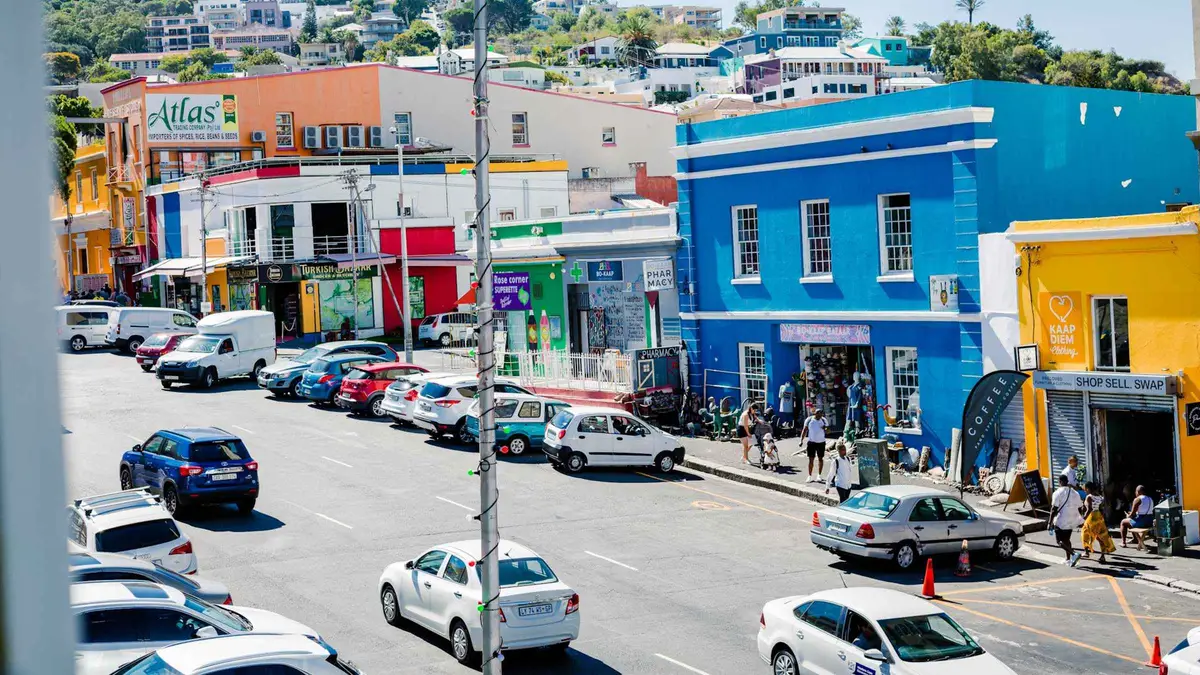 from $40.49
Cape Town Walking Tour: Bo-Kaap & City Highlights
2-hour guided walk through Bo-Kaap and the city landmarks with a snack thrown in, offered in four languages including Xhosa and Afrikaans. Entry fees to any paid sites are your own.
Check AvailabilityPrices, ratings and details are the platform's own, checked in Q3 2026; dollar figures are the listed prices — the platform bills in your account's currency.
Where To Go Next
The wine, at full depth
Estates, tastings and who drives: Stellenbosch, Franschhoek and the day-trips hub.
40–75 minutes outWhat the eating costs
The full money picture — our menu estimates, the tipping maths, the card culture: Cape Town trip costs.
Mains ~R150–280, our estimateThe mornings around the food
Markets and food streets threaded into days: free things to do and the Cape Town city guide.
Saturday = market dayEating in Cape Town: Questions
What food is Cape Town famous for?
Cape Malay cooking — bobotie, aromatic curries, koesisters — born in the Bo-Kaap; braaied snoek and harbour fish and chips; the Gatsby, the city's own loaf-sized sandwich; biltong; malva pudding; and wine the city has grown since 1685. The dish table says what each is and which street it lives on.
Does Cape Town have Michelin-starred restaurants?
No — Michelin publishes no South African guide at all, so no restaurant in the country holds a star. The national benchmark is the Eat Out awards, whose 2025 list put four of the country's seven three-star tables in and around Cape Town. The awarded tables cites them with each venue's own printed facts.
Where should I eat near the V&A Waterfront?
At the harbour edge rather than the mall core — same precinct, better theatre — with Pier, one of 2025's three-star tables, as the special-occasion end and the food-hall counters as the no-decision dinner. The territory map places it among the five food districts.
What is a Gatsby?
Cape Town's own creation: a whole bread loaf split and packed with chips and fillings — masala steak and polony are canonical — built to feed two or three. Born on the Cape Flats, sold at takeaways citywide, and a working-class icon rather than a refined one. It's in the dish table.
How much do you tip in Cape Town restaurants?
10–15% — 10% is standard, and a 10% service charge is often auto-added for tables of six or more, so read the bill first. The machine handles it at the table. Even the country's most awarded restaurant prints its service charge at a discretionary 13.5%, which tells you the ceiling. See the bill decoded.
Which food markets are worth visiting in Cape Town?
The Oranjezicht City Farm Market first — Saturday 08:00–14:30 and Sunday 08:30–14:30 by its own published hours, free entry, at Granger Bay — and the Old Biscuit Mill's Saturday market in Woodstock, which the venue confirms without publishing hours, so go mid-morning. The market section has both, honestly labelled.
Is Cape Town good for cheap eats?
Exceptional: Bo-Kaap curry counters, harbour fish and chips around $6–9 (our estimate), Gatsbys that feed a group for a few dollars each, and market grazing — while a top mid-range main runs only about $9.32–17.40 (R150–280, our estimate). The full arithmetic lives on the costs page.
Cape Town Food, On Camera
Three of the best food cameras on earth working this page's territories — the street layer, the bar-and-bistro rows, and the market-to-Bo-Kaap morning.
Cape Town Street Food — 24 Hours in South Africa Paradise!!
The street and harbour layer of this page — Gatsby included — eaten in one day.
Video: Mark Wiens48 Hours in Cape Town — 16 of the Best Bars & Restaurants
The Bree-and-Kloof bistro-row method, run at speed by professionals.
Video: TOPJAWSolo in Cape Town: The Ultimate Food Tour — Oranjezicht, Bo-Kaap & Hidden Gems
The Saturday market and the Cape Malay quarter in one morning — this page's two favourite territories, filmed.
Video: Mondy LinVideos load from YouTube only when you press play.
Reviewed Q3 2026 (July–September 2026); next review Q4 2026. Prices, hours and terms are set by the venue or operator and confirmed at checkout.
We may earn a commission if you book through one of our links, at no extra cost to you. Full affiliate disclosure