 Cape Town City Guide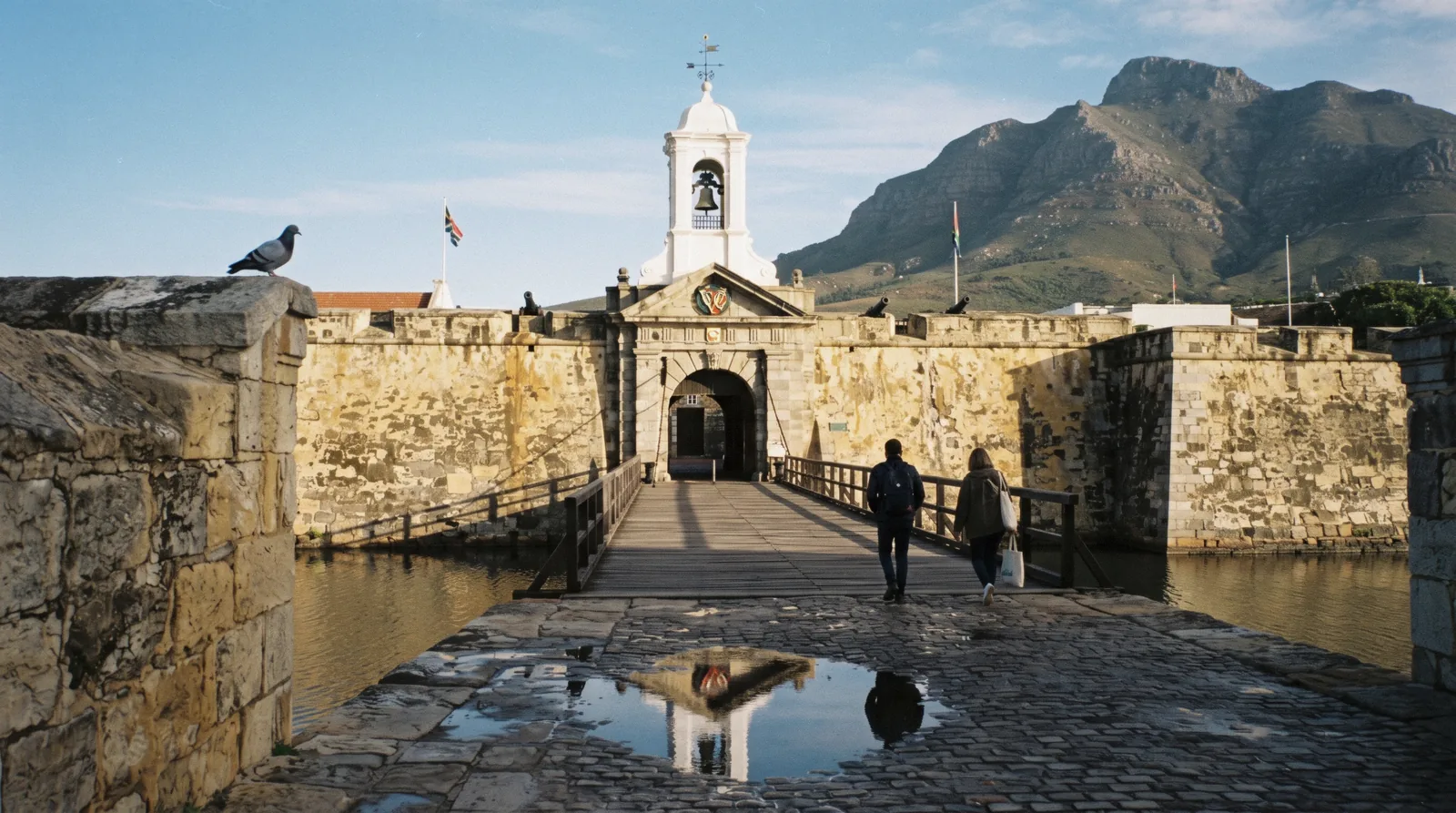
Castle of Good Hope
The Castle of Good Hope is the oldest surviving colonial building in South Africa: a five-pointed Dutch East India Company fort built 1666–1679, still standing at the edge of the Grand Parade with the city grown up around it. Entry is $3.11 (R50), it opens every day of the week, and an unhurried visit takes about 90 minutes. This page covers the hours, the bastions, what is inside the walls and how to fold it into a City Bowl day; the whole city plan starts from the Cape Town city guide homepage and its things to do list.
Quick answer Hours, price, what's inside, the Key Ceremony catch
The Castle of Good Hope opens daily 09:00–16:00 with ticket sales ending at 15:45, closed only on Christmas Day and Workers' Day. Entry is $3.11 (R50) for adults, paid at the gate — the cheapest ticket among Cape Town's headline sights.
Key takeaways
- No booking needed and no queue culture: walk up any day. The Key Ceremony is the exception — its times are not on the official site, so phone +27 21 787 1249 rather than trusting a blog
- The art, culture and history walking tour passes the Castle and the surrounding civic quarter with a guide; entry fees stay your own at the gate
- Pair it with the District Six Museum, five minutes up Buitenkant Street — fort and forced-removals story make one coherent morning on foot
Key facts
Opening hours
| Daily, Monday–Sunday | 09:00–16:00 |
|---|---|
| Ticket sales end | 15:45 |
Closed Christmas Day and Workers' Day (1 May)
Admission
- Adult
- $3.11 (R50)
- Reduced
- Child 5–17 and pensioners R25; school learners R8
- Free
- None stated on the official site
Planning it
- Time needed
- Not stated by the Castle; our routing: 60–90 minutes for the walls, museums and courtyards
- Address
- Corner of Darling Street and Buitenkant Street, Cape Town (Grand Parade side)
The ways to see the Castle, priced from castleofgoodhope.co.za and GetYourGuide in Q3 2026. There is only one gate price and no timed entry; the other rows are city tours that put the Castle in context rather than replace the ticket.
| Option | Price | Includes | Cancel | Book |
|---|---|---|---|---|
| Gate ticket, adult | $3.11 (R50) | Full access: bastions, museums, courtyards | Pay at the gate — online sales listed 'Coming Soon' | Official site |
| Gate ticket, child 5–17 / pensioner | $1.55 (R25) | Same access; school learners R8 | Pay at the gate | Official site |
| Art, culture & history walking tour, 2 h | $37.38 | Guided city walk past the civic quarter; entry fees excluded | Free up to 24 hours before | Check Availability |
| Hop-on hop-off bus, 48 h | $33 | Bus network linking the Castle area with the Waterfront and beyond | Free up to 24 hours before | Check Availability |
At R50 the gate ticket costs less than a Waterfront coffee and there is nothing to pre-book; the tour rows are for stitching the Castle into a broader city day, not for skipping a line that does not exist.
City tours that put the Castle in context
The Castle sells no guided-tour product through resellers, so these cards are the city walks and transport that build the day around it. Prices are the operators' listed figures read in Q3 2026.
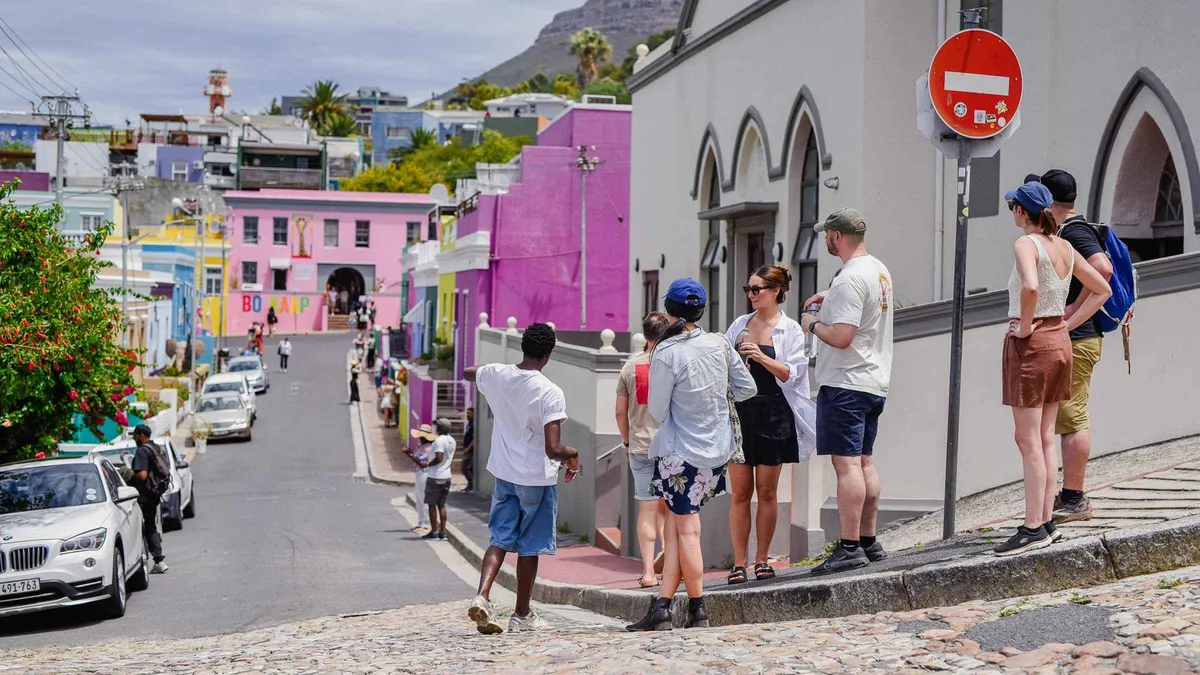 from $37.38
Cape Town: Art, Culture & History Walking Tour
Street art, history and Bo-Kaap in a 2-hour walk from the Bo-Kaap Deli — slightly cheaper than the rival walk but English-only and no snack. Wear comfortable shoes and bring water.
Check Availability from $40.49
Cape Town Walking Tour: Bo-Kaap & City Highlights
2-hour guided walk through Bo-Kaap and the city landmarks with a snack thrown in, offered in four languages including Xhosa and Afrikaans. Entry fees to any paid sites are your own.
Check Availability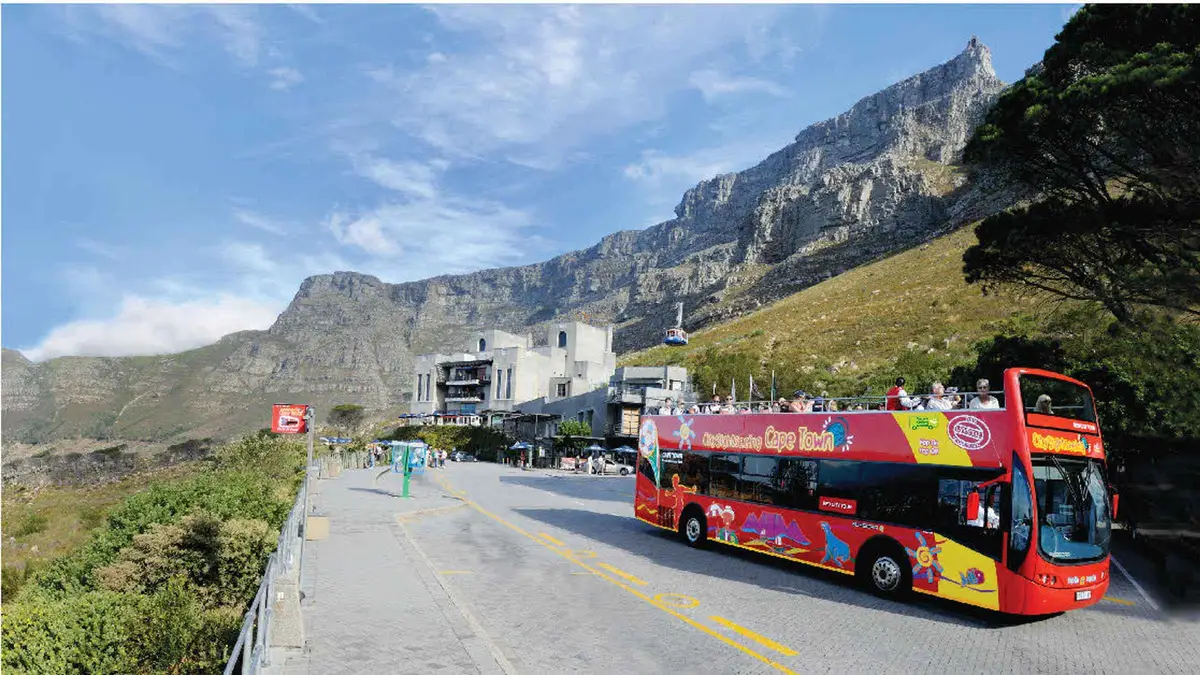 from $33
Cape Town: Hop-On Hop-Off Bus Tour with Optional Cruise
48 hours of open-top bus across the city routes with commentary in 15 languages, onboard Wi-Fi and a free walking tour. It moves you between sights — their entry fees stay separate.
Check AvailabilityPrices, ratings and details are the platform's own, checked in Q3 2026; dollar figures are the listed prices — the platform bills in your account's currency.
What the Castle is: the VOC's pentagon, 1666–1679
It was never a fairy-tale castle — it is a working seventeenth-century artillery fort, built to hold the resupply station at the Cape for the Dutch East India Company, and that origin explains everything you see: the low thick walls, the five arrow-headed bastions, the moat, the sea that used to reach almost to the gate before land reclamation pushed it a kilometre away.
Not Van Riebeeck's fort — the one that replaced it
Jan van Riebeeck, who founded the Cape settlement in 1652, built an earlier fort of earth and timber — the Fort de Goede Hoop — near the same ground. It crumbled in the winter rains, and when war with England loomed, the Company ordered a permanent stone replacement. Work on the present Castle began in 1666 under commander Zacharias Wagenaer, using stone, shells burned for lime, and the forced labour of enslaved people, Khoi workers, soldiers and sailors.
It was completed in 1679 and has never fallen out of use since — which is what makes it the oldest surviving colonial building in the country.
The five bastions and their names
The pentagon's five points are named after the titles of William III of Orange: Leerdam, Buuren, Katzenellenbogen, Nassau and Oranje. Each bastion carried its own guns and its own duties — Leerdam faces the city and flies the flags; Katzenellenbogen, the hardest to spell and the favourite of every guide, held the gunpowder magazine. Walking the wall circuit past all five points takes about twenty minutes and is the best free orientation over the Grand Parade, City Hall and the mountain behind.
Three and a half centuries of garrison life
The Castle served as the seat of Cape government for its first century and a half: governors lived here, the Council of Policy met here, and the cellars and dungeons held prisoners — including, under the British, leaders of the frontier wars. It remains a military site today, home to army ceremonial units and regimental headquarters, run day to day by the Castle Control Board. That continuity is the point of the visit: it is not a reconstruction, and the soldiers you may see crossing the courtyard are not actors.
What to see inside the walls
The gate ticket covers everything: two museums, the ceremonial rooms, the bastion circuit and the courtyards. The layout is two courtyards divided by a cross-wall, with the museums in the inner one.
The Kat Balcony and the William Fehr Collection
The inner courtyard's showpiece is the Kat, the eighteenth-century cross-wall with its sculpted balcony from which proclamations were read to the garrison. Behind it, the governor's rooms hold the William Fehr Collection — paintings and furniture of the colonial Cape, including views of Table Bay when the sea still reached the walls. It is the closest Cape Town comes to a period-rooms museum, and it comes free with the R50 gate ticket.
The Castle Military Museum
The Military Museum by the entrance gate walks the Cape's conflicts from the VOC era through the frontier wars to the twentieth century — uniforms, weapons, and honest captions about who the fort's guns were pointed at. Allow half an hour. The dungeons and the punishment cells known as the donker gat ('dark hole') are part of the fabric near the gate; their doorways alone explain the fort's other function.
The courtyards, the moat and the wall circuit
Climb to the rampart walk and circle the five bastions for the view over the Grand Parade — the square where crowds gathered to hear Nelson Mandela speak from City Hall's balcony on his release in February 1990. The moat, dry for long stretches of the year, is crossed by the bridge at the main gate, and the bell in the gate tower, cast in Amsterdam in 1697, is the oldest in South Africa and still rings. Ghost stories cling to the Castle — the Lady in Grey, footsteps on Leerdam — and the guides tell them with a straight face; they are folklore, and good folklore, which is all this page will claim for them.
Practicalities inside the walls
The fort is largely level once you are through the gate: the courtyards and museums sit at ground level, with stairs only for the rampart circuit, so most of the visit works with a stroller or limited mobility. A café operates in the inner courtyard for the mid-visit pause, and the whole site is exposed — the courtyards bake in summer and funnel the south-easter, so a hat in season and a windproof layer year-round earn their space. Ceremonial events and markets use the Castle grounds through the year on their own schedules; if the courtyard is set up for one when you visit, the museums and walls stay open around it.
The Key Ceremony: times are not published — phone first
The Key Ceremony — the ceremonial unlocking of the Castle with the firing of the signal cannon — is the event visitors most often build a morning around, and it is exactly where the official information runs out. The Castle's own website, read in Q3 2026, publishes no ceremony schedule at all. Third-party listings circulate times (weekday mornings with cannon fire shortly after, Saturday firings, nothing on Sundays), but they do not agree with each other and none of them is the Castle speaking.
So this page prints the only advice that cannot go wrong: phone the Castle on +27 21 787 1249 the day before and ask whether the ceremony is running and when. If it is, arrive well before the stated time — the courtyard viewing spots by the gate are limited — and expect the cannon: it is loud, and small children should be warned. If the ceremony is not running, nothing else about the visit changes; the walls, museums and courtyards carry the ticket on their own.
A related quirk worth knowing: the Castle also lists its online ticket sales as 'Coming Soon', so everything here — entry and any ceremony — is paid and confirmed in person, at the gate, in rand.
Getting there and getting in
The Castle stands at the corner of Darling and Buitenkant Streets, on the far side of the Grand Parade from City Hall — an unmissable pentagon on any city map. From Greenmarket Square it is about a 10-minute walk down Darling Street; from the District Six Museum, 5 minutes up Buitenkant (walking minutes are our estimates). Cape Town railway station and the Grand Parade bus terminus sit directly across the Parade, and ride-hail drops work best on Darling Street by the main gate.
Entry is through the main gate facing the Parade side, tickets at the gate office: adult $3.11 (R50), child 5–17 and pensioners R25, school learners R8, sales ending 15:45 sharp. Arriving after 15:00 compresses the visit; the museums alone want an hour.
The surrounding blocks are busy commercial city centre. Standard City Bowl habits apply — phone in the front pocket, no wandering the Parade after dark — and the Cape Town safety page covers the fuller picture without drama.
- Main gate on the Grand Parade side; tickets at the gate, cash or card
- Daily 09:00–16:00, sales end 15:45; closed Christmas Day and 1 May
- 10 minutes on foot from Greenmarket Square, 5 from the District Six Museum (our estimates)
- Key Ceremony: confirm by phone, +27 21 787 1249
Castle of Good Hope map: gate and next stops
The Castle's main gate on the Grand Parade, and the sights within a ten-minute walk that make up the civic-quarter circuit.
Next stop from the Castle
The Castle anchors the eastern end of the City Bowl's history circuit. Walk minutes are our estimates from the map.
District Six Museum
Up Buitenkant Street. The District Six Museum tells the forced-removals story — book ahead via Quicket and note it closes Sundays.
5 min walkGreenmarket Square
Down Darling and up Shortmarket. Greenmarket Square and the Company's Garden extend the same walk into the old city core, free.
10 min walkCastle of Good Hope questions
What are the five points of the Castle of Good Hope?
The five bastions — Leerdam, Buuren, Katzenellenbogen, Nassau and Oranje — named after titles held by William III of Orange. The rampart circuit past all five takes about twenty minutes and is included in the $3.11 (R50) gate ticket.
Did Jan van Riebeeck build the Castle of Good Hope?
No. Van Riebeeck built the earlier Fort de Goede Hoop of earth and timber after landing in 1652. The stone Castle that replaced it was begun in 1666 under Zacharias Wagenaer and completed in 1679, making it the oldest surviving colonial building in South Africa.
How much does the Castle of Good Hope cost?
Adults $3.11 (R50), children 5–17 and pensioners R25, school learners R8 — read on the official site in Q3 2026. Pay at the gate; online sales are listed as 'Coming Soon'. No free day is stated. The ticket options and city-walk pairings are above.
What time is the Key Ceremony at the Castle of Good Hope?
The Castle does not publish Key Ceremony times on its official website, and third-party listings disagree with each other. Phone +27 21 787 1249 the day before to confirm whether it runs and when — the Key Ceremony section explains what to expect if it does.
Who lived in the Castle of Good Hope?
Cape governors and the VOC garrison — the Castle was the seat of Cape government for roughly its first 150 years, with the governor's quarters behind the Kat Balcony now housing the William Fehr Collection. It remains a working military site today, home to ceremonial and regimental units.
How long do you need at the Castle of Good Hope?
The Castle states no visit length; our routing is 60–90 minutes — half an hour for the two museums, twenty minutes for the bastion circuit, the rest for the courtyards. Combined with the District Six Museum five minutes away it makes a comfortable half-day on foot.
Is the Castle of Good Hope haunted?
It has South Africa's best-worn ghost stories — the Lady in Grey, bells that ring themselves, footsteps on the Leerdam bastion — and the guides enjoy telling them. They are folklore attached to a 350-year-old garrison with dungeons, not anything the Castle claims as fact, and this page treats them the same way.
Where the Castle fits in a Cape Town day
Take it mid-morning: through the gate at 09:30, walls and museums by 11:00, then the 5-minute walk to the District Six Museum before its 16:00 close, and on through Greenmarket Square and the Company's Garden in the afternoon. That sequence is the City Bowl history circuit, all on foot, for under $10 in combined entry fees. The 1-day itinerary compresses it; the free things to do page covers what the same quarter offers without a ticket at all; and the full attractions list ranks the Castle against the harder-to-schedule sights like Robben Island, which needs booking where the Castle needs none.
The rest of the Cape Town city guide starts from the homepage.
The Castle on Film: Walls, Bastions and Garrison History
Three clips that show the fort's scale better than any map — the pentagon from above, the courtyards at walking pace, and the history told at length.
Fort of the Cape: Secrets of the Castle of Good Hope
The fort's construction, garrison centuries and dungeons, told as a full documentary.
Video: HISTORY AFRICACastle of Good Hope, Cape Town! Ep 453
A visitor's walk through the gates, courtyards and museums at real-world pace.
Video: DustBugs TravelThe Castle of Good Hope
A South African breakfast-TV feature inside the Castle with its custodians.
Video: Good Morning South AfricaVideos load from YouTube only when you press play.
Reviewed Q3 2026 (July–September 2026); next review Q4 2026. Prices, hours and terms are set by the venue or operator and confirmed at checkout.
We may earn a commission if you book through one of our links, at no extra cost to you. Full affiliate disclosure