 Cape Town City Guide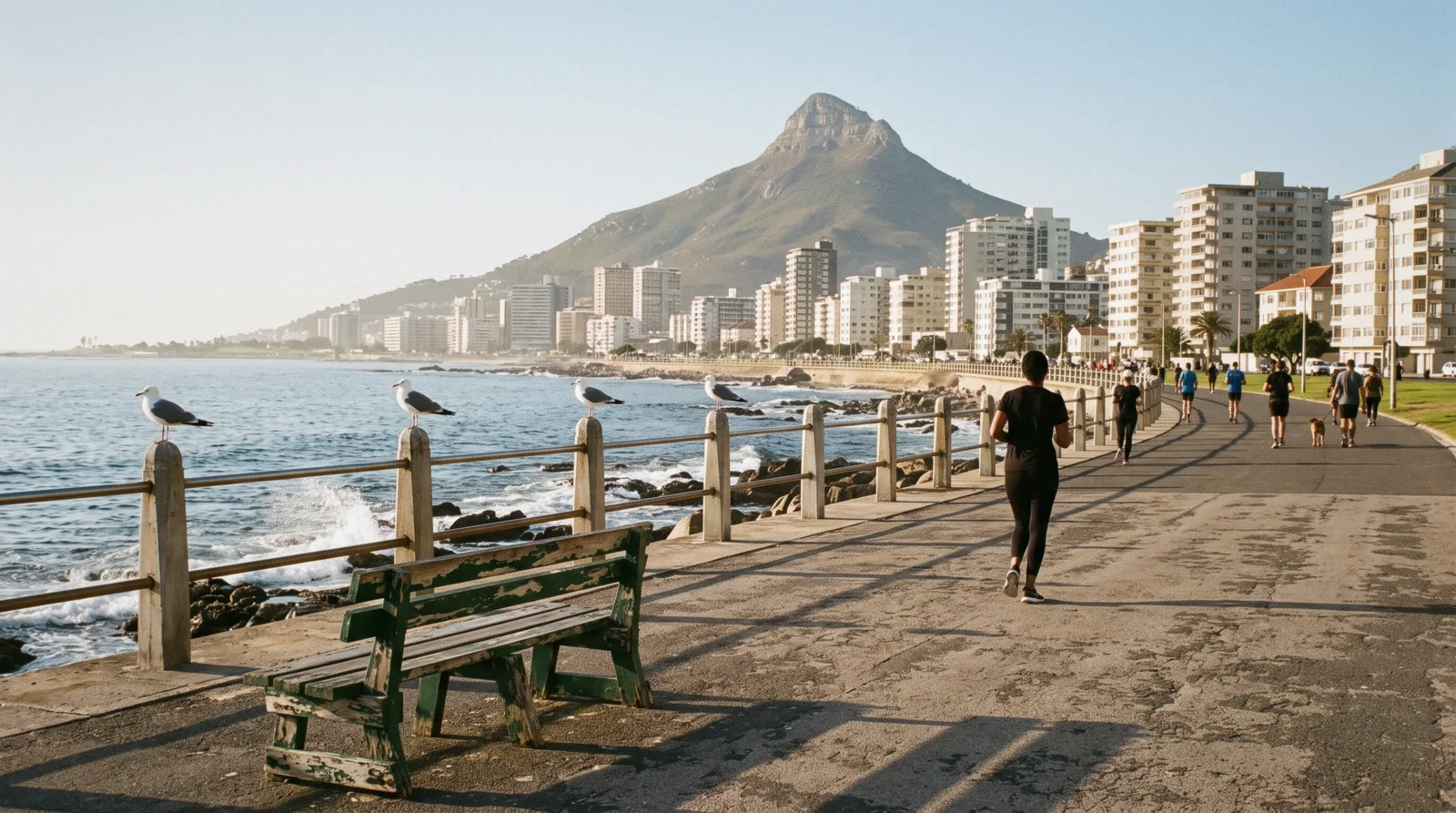
Is Cape Town Safe?
Is Cape Town safe is the most-asked question about this city, and it deserves a better answer than the two it usually gets — the brochure's "perfectly safe" and the forum's horror thread. Both are wrong in the same way: they treat a metropolitan area of four and a half million people as one place. The Cape Town a visitor actually uses — the City Bowl under Table Mountain, the V&A Waterfront, the Atlantic seaboard, the Kirstenbosch side of the mountain and the False Bay villages — is a patrolled, heavily used slice of it, and the risk that operates there is overwhelmingly property crime: a phone off a café table, a bag through a car window, an opportunist on an empty street after dark. Violent crime is real in this city and this page does not pretend otherwise; it is also heavily concentrated in areas that appear on no itinerary, and no official body publishes a tourist-specific crime figure — where the officials are silent, this page says "not stated" rather than inventing a statistic. What follows is built from what they do publish: the Central City Improvement District's own patrol numbers, SANParks' mountain-safety rules for Table Mountain and Lion's Head, and the Western Cape government's emergency-number pages, all read in Q3 2026. The rest of the Cape Town city guide assumes you have read the habits list below once — that is genuinely most of it.
Quick answer Yes, with habits — the patrol numbers, the areas, and the four rules
Cape Town is safe for visitors who run four habits, and unforgiving of visitors who run none. The central city is patrolled by the CCID's 317 dedicated public-safety officers around the clock with a stated reaction time under five minutes, and the areas tourists use are not the areas where the city's violent crime concentrates — but no authority publishes a tourist-specific crime statistic, so nobody can honestly quote you odds. The four habits: keep the phone off the kerb-side table, take ride-hail rather than walking after dark, never hike the mountain alone, and park in guarded or off-street parking with nothing visible in the car.
Key takeaways
- The whole page compresses into the habits table — four rules cover most of the real exposure, and none of them costs anything.
- The mountain has its own rules: SANParks says never hike alone and never after sunset — the mountain section has the full list, and the guided group hikes compared on the Table Mountain page outsource the problem.
- Townships are visited with a guide who lives there, not driven through: the Langa walking tour is $31.15 and rated 4.9 from 643 reviews.
- Getting between areas after dark is a ride-hail question, not a walking question — getting around Cape Town covers Uber, Bolt and the MyCiTi bus honestly.
What Officials Actually Publish, and What They Don't
Start with the silence, because it is the honest foundation. The South African Police Service publishes quarterly crime statistics by police precinct — murder, robbery, theft out of vehicles, all of it, precinct by precinct — but neither SAPS nor the Western Cape government publishes any figure that separates visitors from residents. There is no official "crimes against tourists" number for Cape Town. Anyone quoting you one is deriving it themselves, so this page does not.
What the precinct structure does show, and what every honest local will tell you, is concentration. The city's violent-crime burden falls overwhelmingly on a handful of precincts on the Cape Flats, kilometres from anything on a visitor's itinerary, and driven by dynamics — gang territory, informal settlement density — that a tourist never touches. The visitor's Cape Town runs on a different risk register: theft from cars, phone snatching, opportunistic street robbery on empty stretches. Unpleasant, avoidable, and a different category of problem.
What officials do publish is the patrol layer. The Central City Improvement District — the body the CBD's property owners fund to manage the central city — states that it fields 317 Public Safety Officers working 24/7, backed by four response vehicles and a 24-hour control centre, with a reaction time it puts at under five minutes within its footprint. That footprint is the downtown a visitor walks: Long Street, Bree Street, Greenmarket Square, the Company's Garden edge. The V&A Waterfront is a privately managed precinct with its own security operation on top of that. Neither makes the city crime-free; both mean that the places you will actually stand are the most watched square kilometres in the country.
Not ideal for
- If your standard is a city where no habit is required — where you can walk any street at 1 a.m. reading your phone — Cape Town is not that city, and this page will not pretend it is. The trade is real: you run four habits, and in exchange you get Table Mountain.
The Four Habits That Do Almost All the Work
Every safety paragraph ever written about Cape Town compresses into this table. The mountain rows come from SANParks' own published hiking rules and the rest from the CCID's visitor guidance, read in Q3 2026 — none of it is folklore, and none of it costs anything.
Read the second column as the mechanism, not a scare: each habit removes the one situation where visitors are actually exposed. Run all four and the remaining risk profile looks like any big city's.
| Habit | What it prevents | The detail that matters |
|---|---|---|
| Phone off the kerb-side table | The commonest visitor loss in the city: a phone lifted from a café or restaurant table beside the pavement | Keep it in a front pocket or zipped bag, and don't walk a quiet street with it out. If you need the map, step into a shop doorway |
| Ride-hail after dark | The empty-street problem. Cape Town's centre empties in the evening in a way European cities don't, and the exposure is the walk, not the venue | Uber and Bolt both operate officially in Cape Town and pickups take minutes in visitor areas. Wait for the car inside the venue, check the plate. Budget a few dollars a hop — getting around has the detail |
| Never hike alone | Both mountain problems at once: injury with nobody to raise the alarm, and the rare but real muggings on quiet paths | SANParks' own rule for Table Mountain National Park — its published guidance calls four people the ideal group, says start early, and says no hiking after sunset. The mountain section has the full list |
| Guarded parking, empty car | Theft out of vehicles — the classic Cape Town crime. A bag visible on a seat is an invitation anywhere in the world; here it is a reliable one | Use off-street or guarded parking, load the boot before you leave, not at the destination, and leave nothing visible — not a jacket, not a cable |
The half-habits: cards and car guards
Two additions that are half-habit, half-culture. Cape Town is a card-first city — you can pay for almost everything by tap, so there is no reason to carry a wallet of cash; the costs page covers the card culture properly. And the informal "car guards" who wave you into street bays are a fact of city life, not a scam: a few rand of coins when you return to the car is the custom, and it is one of the few things coins are still for.
Neither the city nor any authority publishes rules about them — treat the guarded parking garage as the actual security measure and the car guard as a tip, not a guarantee.
The Areas Visitors Actually Use, and How They Differ
The one-word answer to "is this area safe" is always a lie; the honest version is what each area is like at which hour. This table covers the places this guide sends you. The patrol facts are the CCID's and the precincts' own; the rest is the pattern, stated plainly.
The thread through every row: daytime in visitor areas is busy and watched, and the variable is the empty street after dark. That is a ride-hail problem, not a reason to avoid an area.
| Area | By day | After dark | The one thing to know |
|---|---|---|---|
| City Bowl / CBD | Busy, patrolled — the CCID's 317 officers work this footprint 24/7 | Bree and Kloof Street restaurant rows stay lively; the blocks between them empty out. Ride-hail door to door | The City Bowl page maps which streets hold their evening crowd |
| V&A Waterfront | A privately managed, gated-feel precinct with its own security layer — the most supervised space in the city | Fine into the evening; it is the standard first-night dinner answer | Also the ferry point for Robben Island and home of Zeitz MOCAA |
| Sea Point / Green Point | The promenade is the city's shared front garden — runners, families, dog walkers from dawn | The promenade itself is used into the evening; the residential blocks behind are quiet but ordinary | The promenade is the best free thing in the city — see free things to do |
| Camps Bay / Clifton | Beach-resort rhythm, busy all season | Restaurant strip fine; the beach itself after dark is empty and unlit — don't | Sunset on Camps Bay beach, then dinner across the road, then a car home |
| Bo-Kaap | A living residential neighbourhood that welcomes respectful visitors by day | Quiet residential streets — no reason to be walking them late as a stranger | Go with context: the Bo-Kaap page or a guided walk that starts there |
| Southern Suburbs / Constantia | Leafy, spread out, car country — Kirstenbosch and the wine estates | You will be driving anyway | Distances are the point here: this is not walking territory at any hour |
| False Bay villages | Kalk Bay, Muizenberg, Simon's Town — small-town rhythm, busy weekends | Villages go to bed early; the drive back is the plan to make | The train line along this coast is scenic but unreliable — getting around explains why we don't plan around it |
The Mountain Has Its Own Rules
The likeliest emergency involving a Cape Town visitor is not a crime at all — it is a hiking misjudgement. Table Mountain is a real mountain wearing a city's backdrop: over a kilometre high, weather that turns in half an hour, and paths that look shorter than they are. SANParks, which runs Table Mountain National Park, publishes its own safety rules and they are blunt: do not hike alone — it calls four people the ideal group size — start early, tell someone your route and expected return, and do not hike after sunset. Carry water, a warm layer and a charged phone even on a sunny morning, because the tablecloth cloud that makes the postcard also erases visibility on the top.
The same never-alone rule is the mugging defence, and this is where the two kinds of safety meet. The rare incidents on the mountain happen on quiet paths to hikers alone or in pairs, at quiet hours. A group of four on a busy route at 7 a.m. has, in practice, a weather problem and a fitness problem and nothing else. Platteklip Gorge on a Saturday morning is a procession; the same path at 5 p.m. with the last cable car in doubt is how rescues start — remember the cableway closes for wind with no notice, so check the live status before you commit to riding down.
If you are one person who wants to hike, do not solve it by hiking alone: guided group hikes leave every morning — the summit hike with a guide is $60.74 and rated 4.9 from 763 reviews on the platform, and the sunrise Lion's Head version handles the dark start with headlamps. Both are compared, with route detail, on Table Mountain and Lion's Head; mountain emergencies go through 10111 or 112, and SANParks' advice is to report your location before you need to.
Not ideal for
- Signal Hill and the Lion's Head road at sunset draw crowds, and car break-ins at the viewpoint car parks are the known pattern there — take the empty-car habit up the hill with you, or go with a group and one car.
After Dark: How Evenings Actually Work
Cape Town evenings are good, and the way locals run them is simple: you go from door to door, not from street to street. Dinner on Bree Street, a show at the Baxter, live jazz in the city — all normal, all busy. What locals do not do is walk twenty dark minutes between venues, and neither should you. Uber and Bolt both operate officially here, cars arrive in minutes in visitor areas, and the fare for a hop across the City Bowl is small — the app quotes it before you commit, and no official fare table exists to print. Wait inside, match the plate, sit in the back.
At the airport, use the authorised layer: Airports Company South Africa lists approved metered-taxi operators with kiosks in the terminal and names Uber and Bolt as authorised e-hailing services, and its own advice is to decline anyone soliciting a ride in the arrivals hall. The full arrival playbook — including why we don't recommend the bus link at the moment — is on the airport-to-city page.
Two honest evening notes. First, the city's public transport is not an evening tool: MyCiTi's network thins outside peak windows and the suburban rail is a daytime-curiosity at best, so budget for ride-hail and read getting around Cape Town before you assume otherwise. Second, the classic late mistake is the lone walk back to accommodation "because it's only ten minutes" — the incident reports visitors generate cluster exactly there. The ride costs less than the risk premium you'd accept by walking; take it every time.
Not ideal for
- If a night out ends on Long Street at closing time, the pavement crowd is its own hazard — pickpockets work it like they work any nightlife strip on earth. Keep the phone away and have the car already booked.
Townships: Guided Context, Not a Drive-Through
Most of Cape Town lives in the townships and informal settlements the highway signs name — Langa, Gugulethu, Khayelitsha — and the question of whether to visit divides people honestly. Our position: yes, with a guide who lives or works there, and never as an unaccompanied drive-through with a camera. The difference is not only safety; it is the difference between meeting a place and gawking at it.
The guided format solves both halves. A resident guide knows which streets, which businesses and which hours; the visit puts money directly into the neighbourhood — the shebeen, the barbecue counter, the arts centre; and you spend the time in conversation rather than behind glass. The Langa walking tour is run on foot with a local guide, costs $31.15, and holds a 4.9 rating from 643 reviews — the highest-rated cultural experience on this site. The half-day townships tour at $55.45 covers more ground by vehicle with entrance fees included, rated 4.8 from over a thousand reviews.
What not to do is also worth stating plainly: do not self-drive into a township to "have a look", do not photograph people or homes without asking, and be sceptical of any operator whose pitch is poverty rather than people. District Six — the inner-city neighbourhood destroyed by apartheid's forced removals — is a different kind of visit and needs no guide: the District Six Museum tells that story indoors, often with ex-resident guides, and pairs naturally with a township visit for the full arc of the history.
Not ideal for
- If your schedule allows only one, choose by format: the walking tour is conversation-first and small; the vehicle tour covers more history per hour. Neither runs after dark, and that is by design.
Solo Travellers, Women, and the Questions the Forums Ask
The search data behind this page is blunt: people ask whether Cape Town is safe for women, for solo travellers, for American tourists, at night. The honest composite answer is that the habits do not change — they just matter more, because every one of them is about not being the most convenient target on an empty street.
Solo travellers lose the built-in company that makes the mountain rule automatic, so the fix is structural: book the group hike, join the walking tour, use the hostel or guesthouse's own networks to find hiking partners — asking "who's doing Lion's Head tomorrow?" at breakfast is a Cape Town tradition. Solo women report the city much as they report any large city: fine in the used spaces, uncomfortable on empty streets, and best with the ride-hail habit non-negotiable after dark. Street harassment exists at big-city levels; the patrolled visitor core keeps it background rather than foreground.
Two specifics worth naming. Runners: the Sea Point promenade at dawn is full of locals and is the right place for it — an isolated trail run alone at dusk is the wrong one, on SANParks' own rules as much as anyone's. And the "is it safe for American tourists" question that trends in US search gets the same answer as everyone else's: nationality changes nothing about the risk profile — the habits are the variable, and they are yours to control. Where you stay changes the arithmetic more than who you are: where to stay in Cape Town weighs each base by exactly this trade.
Not ideal for
- What we cannot give you is a statistic for any of these groups — no official body publishes solo-traveller or gender-split visitor crime data for Cape Town, so every confident number you have read on a forum was invented somewhere.
If Something Happens: Numbers and What to Actually Do
South Africa has no single national emergency number — the Western Cape government's own pages list the split below, read in Q3 2026. Save the first two before you need them; the CCID line is the one that gets a patrol vehicle to you fastest inside the central city.
The numbers, in the order you would actually use them. All work from a foreign phone on a local network; 112 works from any mobile even with no SIM.
| Situation | Number | Detail |
|---|---|---|
| Police, any emergency | 10111 | The SAPS flying-squad line, from any phone |
| Any emergency from a mobile | 112 | Routes to emergency services from any mobile network, SIM or none |
| Inside the CBD | 082 415 7127 | The CCID's 24-hour control centre — its own patrol vehicles, stated reaction under five minutes in the central city |
| Medical emergency / ambulance | 112 from a mobile | Private emergency medicine is the standard for visitors here — travel insurance that covers private care is not optional in South Africa |
| Theft report for insurance | Any SAPS station | You need a case number from a police station for any claim. Bring your passport; the process is bureaucratic but routine |
Three practical notes. Get travel insurance with private medical cover before you fly — South Africa's private hospitals are excellent and its public emergency rooms are overloaded, and every consulate's advice says the same. If a phone is stolen, a police case number plus the IMEI (photograph the box before you travel) is what both the insurer and the blacklist need.
And if a card is skimmed or stolen, the card-first culture cuts both ways: one call freezes it, which is one more argument for tapping a card instead of carrying cash.
The Three Bookings That Outsource the Problem
No tour makes a city safe, and we won't pretend otherwise. What these three remove is the three situations where a visitor is genuinely exposed here: the disoriented first morning, the solo hike, and the township visit without local context. Prices and ratings are the platform's own figures, checked in Q3 2026.
 from $40.49
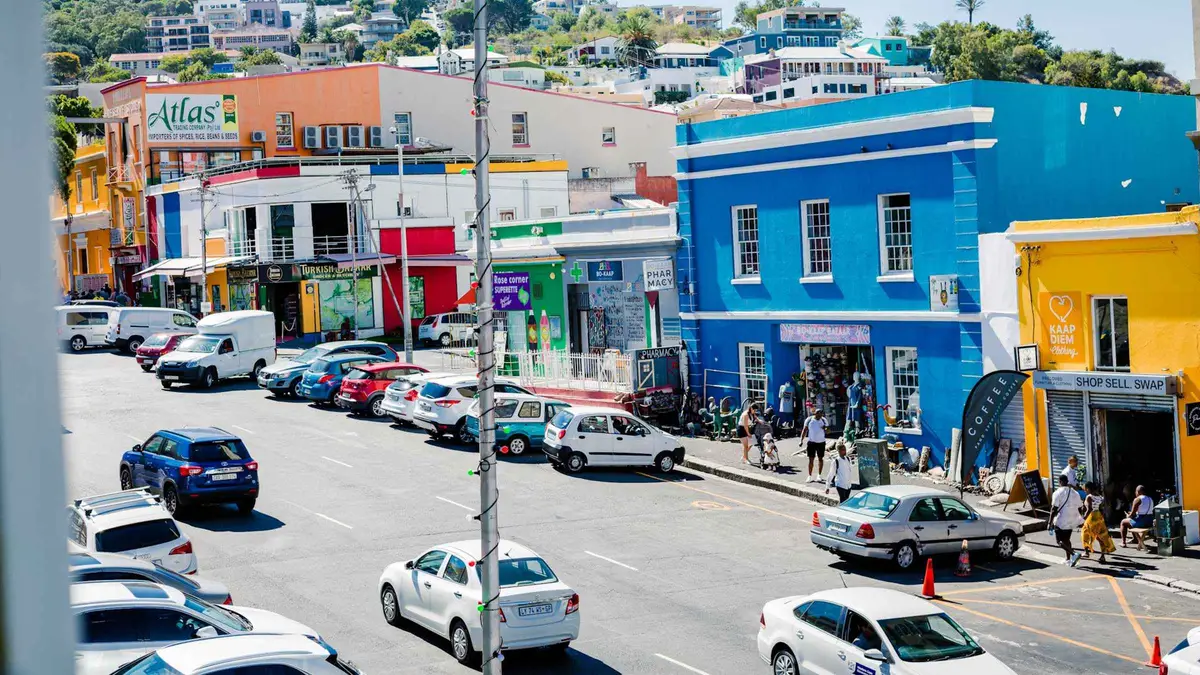
Cape Town Walking Tour: Bo-Kaap & City Highlights
2-hour guided walk through Bo-Kaap and the city landmarks with a snack thrown in, offered in four languages including Xhosa and Afrikaans. Entry fees to any paid sites are your own.
Check Availability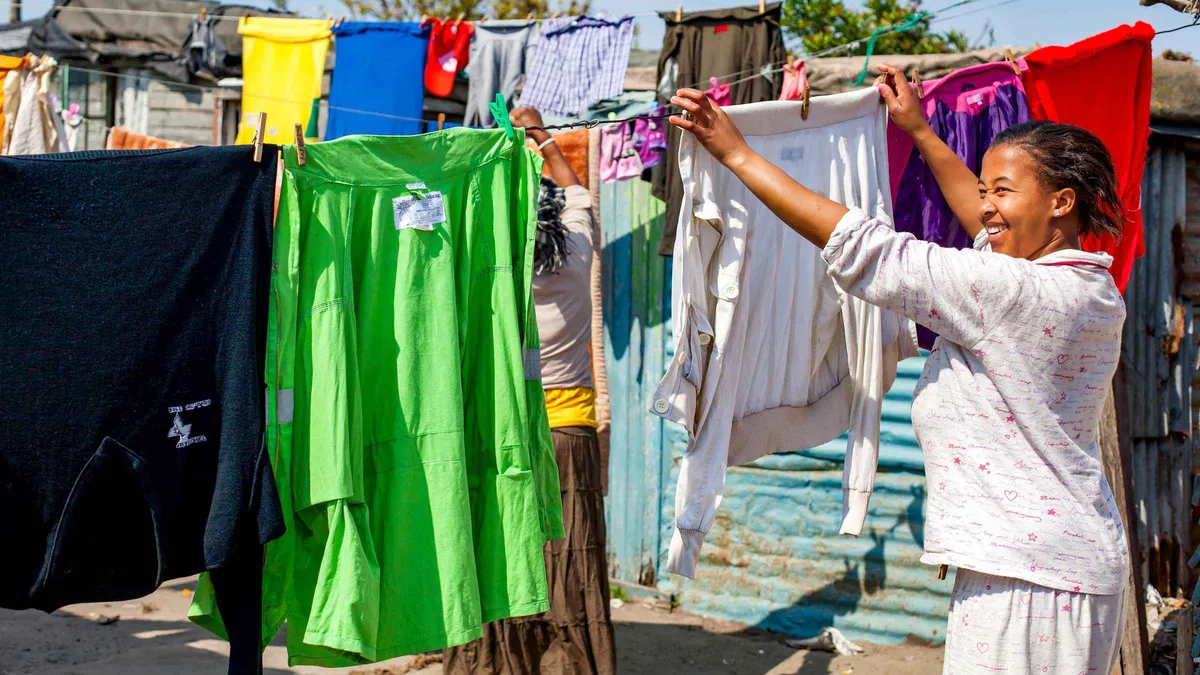 from $55.45
Half-Day Tour Through Cape Town's Townships
3-4 hour township visit with pickup, entrance fees and insurance in the price — rare on this page. Some venues close at weekends, and the tour needs a minimum of two guests. Bring small change for photo donations and crafts.
Check Availability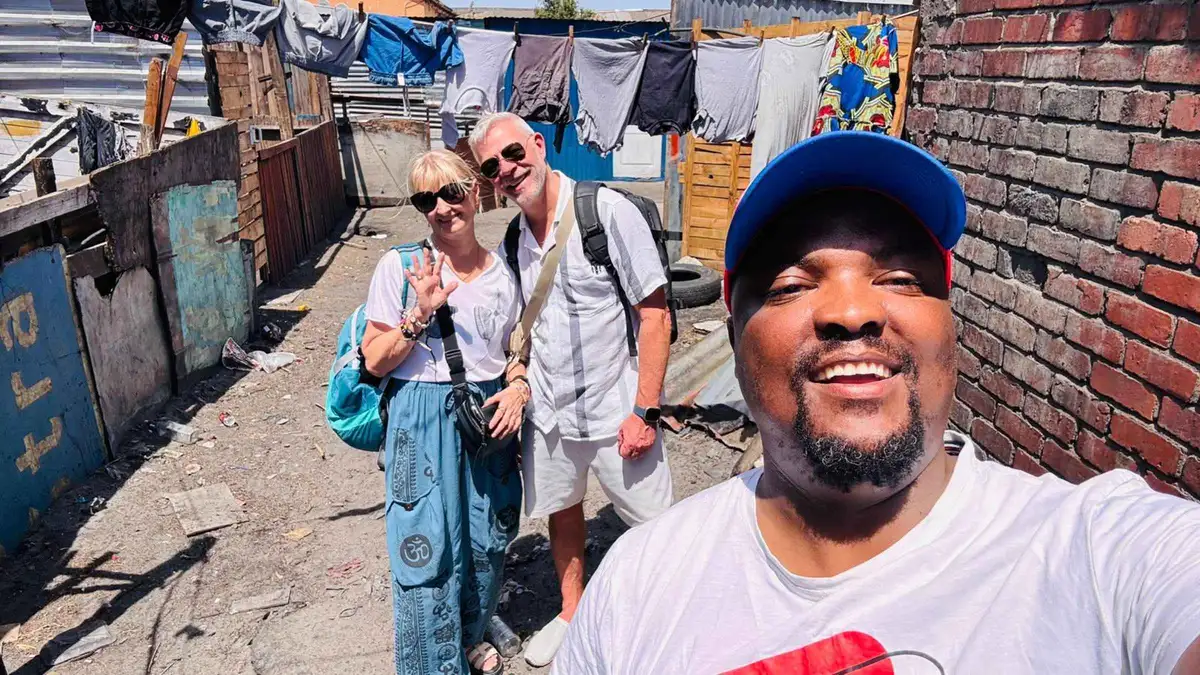 from $31.15
Cape Town: Nathi Langa Township Walking Tour
2.5-hour walk through Langa, Cape Town's oldest township, led by a resident guide in English or Xhosa — the cheapest and most direct township option, but you get yourself there and back.
Check AvailabilityPrices, ratings and details are the platform's own, checked in Q3 2026; dollar figures are the listed prices — the platform bills in your account's currency.
Where To Go Next
Moving between areas
Ride-hail, MyCiTi, the airport arrival and why the train is a curiosity: getting around Cape Town.
The after-dark answerThe mountain, done properly
Routes, the cableway's weather habit and the ticket arithmetic: Table Mountain and the cableway tickets page.
Never after sunsetChoosing your base
Each area's evening character weighed honestly: where to stay in Cape Town. Or start at the Cape Town city guide.
The biggest single variableCape Town Safety: Questions
Is Cape Town safe for tourists?
Yes, for visitors who run the basic habits — the areas tourists use are patrolled and busy, and the CCID fields 317 public-safety officers 24/7 in the central city alone. The city's serious violent crime concentrates in areas no itinerary touches, but no authority publishes a tourist-specific statistic, so treat any quoted odds as invented. Start with the four habits.
Is it safe to walk in Cape Town at night?
In busy, used spaces — the V&A, a restaurant street mid-evening — yes. On empty streets, no: the local habit is ride-hail from door to door after dark, and it is the single highest-value rule on this page. See how evenings actually work.
Is it safe to hike Table Mountain alone?
SANParks' own published rule is no — never hike alone, with four people its stated ideal group size, starting early and never after sunset. Solo visitors should join a guided group hike; the mountain section explains the rules and the weather trap.
Are Cape Town's townships safe to visit?
With a resident guide, yes — the guided walking and vehicle tours run daily and are among the best-rated experiences in the city. Unaccompanied drive-throughs are both unsafe and the wrong way to meet a place. See the townships section.
What are the emergency numbers in Cape Town?
10111 for police from any phone, 112 from any mobile even without a SIM, and 082 415 7127 for the CCID's 24-hour control centre inside the central city. South Africa has no single national emergency number — the full table sorts them by situation.
Is the Cape Town CBD safe during the day?
The central city is the most patrolled ground in the country by day — the CCID's 317 officers, four response vehicles and sub-five-minute stated reaction time cover exactly the streets visitors walk. Run the phone habit and daytime downtown is a normal big-city experience. See the areas table.
Is Cape Town safe for solo female travellers?
Solo women report Cape Town the way they report most large cities: fine in used spaces, with the ride-hail rule non-negotiable after dark and the group-hike rule replacing hiking alone. No official gender-split visitor data exists — the solo section gives the honest composite.
The Safety Question, Answered On Camera
Three clips that test this page's claims against footage — a month on the ground, locals asked directly, and the practical mistakes first-timers make.
Is Cape Town safe? (Our honest experience after 30 days)
A month in the city, run on roughly the habits this page lists — and what daily life in the visitor areas actually looks like.
Video: ON World TravelIs Cape Town Safe? I Asked Locals & Tourists on the Street
Locals give the same area-by-area, hour-by-hour answer as our table, in their own words.
Video: The Nomad Generation21 Tips I Wish I Knew Before Visiting Cape Town
Includes the parking, phone and after-dark habits — useful for seeing where each one applies.
Video: Camden DavidVideos load from YouTube only when you press play.
Reviewed Q3 2026 (July–September 2026); next review Q4 2026. Prices, hours and terms are set by the venue or operator and confirmed at checkout.
We may earn a commission if you book through one of our links, at no extra cost to you. Full affiliate disclosure