 Cape Town City Guide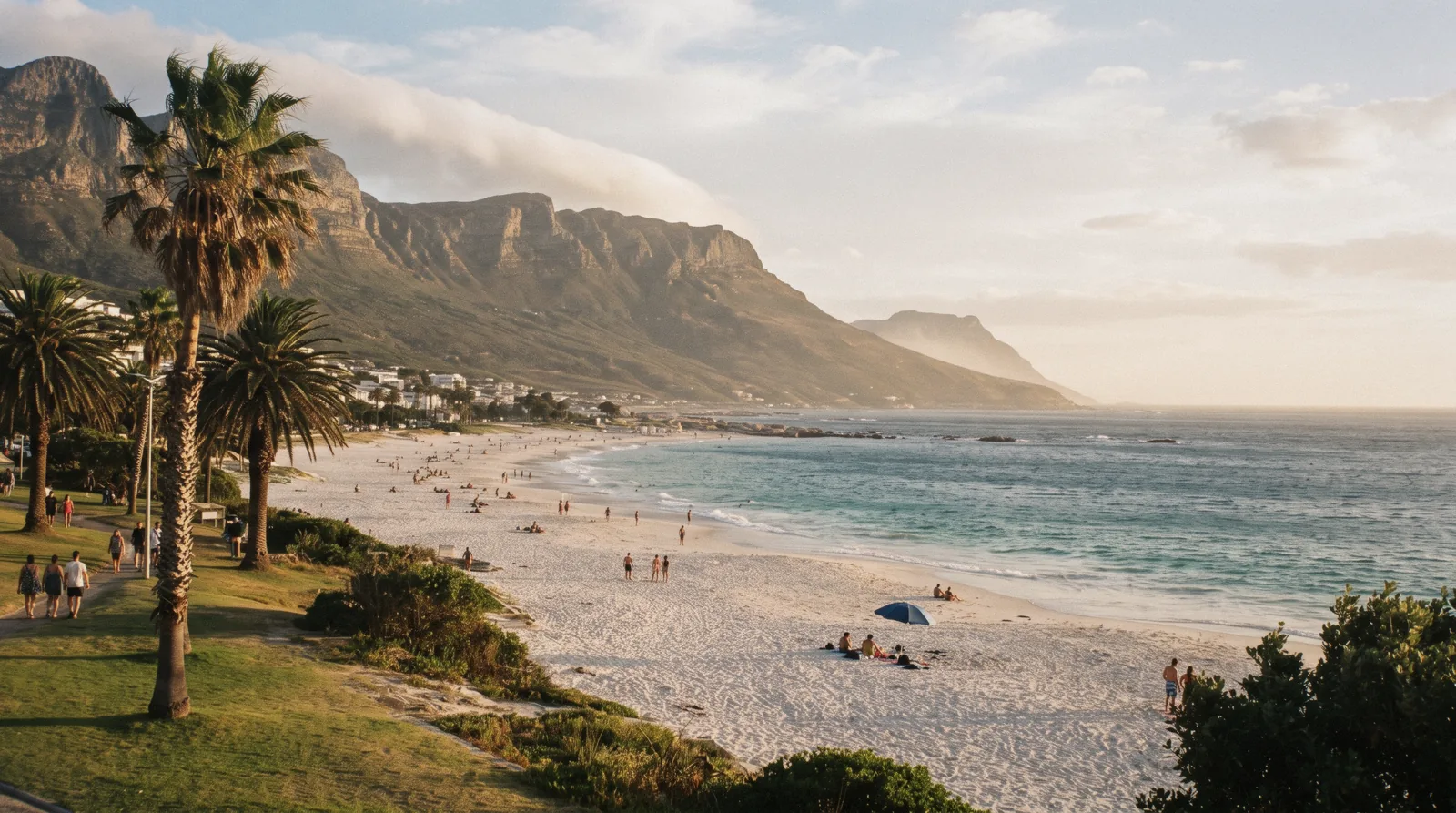
Best Time to Visit Cape Town
The best time to visit Cape Town depends on remembering one fact and unlearning another. The fact: the seasons are inverted — December is high summer, June is midwinter, and the rain falls in the European holiday months. The thing to unlearn: that summer means calm. Cape Town's summer is the windy season — the south-easter dominates on 51–58% of days from November to March in the thirty-year record — and that wind, not rain, is what closes the cableway and cancels the ferries. Every figure below comes from the Open-Meteo ERA5 reanalysis for the city centre, 1995–2024, or from an official page read in Q3 2026. The month-by-month detail lives on Cape Town weather by month; the whole trip is indexed on the planning hub and the Cape Town city guide.
Quick answer The two-season answer, the wind caveat and the cheap window
For beach-and-mountain weather, come between November and March: highs of 22–26°C, almost no rain, and the caveat that the south-easter blows hardest in December and January. For whales, wildflowers and low-season prices, come August to October — the tail of the wet winter, with the Hermanus whale season peaking and the West Coast in bloom. The best compromise months in the thirty-year data are February–March (warmest sea, wind easing off its peak) and October–November (drying, greening, before the holiday crowds). The wettest, cheapest, emptiest months are June and July.
Key takeaways
- Booking a December or January trip? Book beds and the big-ticket tours early — the school year ends 9 December 2026 and the whole country goes on holiday at once.
- Wind is the real weather story: the cableway closes for it without notice and the ticket stays valid 7 days precisely because of that — plan Table Mountain for your first clear morning, not your last.
- Travelling July–November? A whale-watching day from Cape Town is the season's headline act; the boats run from Hermanus, about two hours out.
- August–September only: the West Coast flower bloom, when the park's own gate fee doubles for the spectacle — the guided flower day handles the timing for you.
Cape Town month by month
Average daily high temperature by month in Celsius, Fahrenheit underneath, computed from the Open-Meteo ERA5 reanalysis for the city centre (33.92 S, 18.42 E) over the thirty years 1995–2024.
February is the warmest month on the thirty-year mean at 25.9°C and among the driest at 11.2 mm; July is the coolest at 16.4°C and June the wettest at 94.1 mm across 10.1 rainy days — the exact inverse of a European year. The wind band is the one no brochure prints: mean daily maximum wind peaks in December–January at 25–26 km/h, and the south-easter is the dominant daily direction on more than half of all summer days.
The twelve months, compared for a traveller
Every month from the same ERA5 thirty-year series — temperature, rain and the wind share — with the travel case each one carries. The deeper walkthrough of each month, including what closes, is on Cape Town weather by month.
| Month | High / low | Rain | SE-wind days | The travel case |
|---|---|---|---|---|
| January | 25.6 / 17.5°C | 13 mm | 56% | High summer and high season — book everything; wind at its strongest |
| February | 25.9 / 17.7°C | 11 mm | 58% | Warmest month, False Bay water at its best, crowds ease after mid-month |
| March | 24.4 / 16.4°C | 18 mm | 55% | The insiders' summer: warm, drier than spring, wind easing |
| April | 22.1 / 14.2°C | 34 mm | 55% | Harvest season in the Winelands; calm, golden light |
| May | 19.3 / 12.2°C | 60 mm | 39% | The turn: first fronts arrive, prices drop, hiking is superb between them |
| June | 17.1 / 10.3°C | 94 mm | 33% | Wettest month; whales arriving at Hermanus; the cheap, green low season |
| July | 16.4 / 9.4°C | 89 mm | 37% | Coolest month; whale season proper begins; storm-watching weather |
| August | 16.5 / 9.7°C | 83 mm | 32% | Flower season opens on the West Coast; still wet in town |
| September | 17.9 / 10.9°C | 45 mm | 41% | Flowers peak, whale numbers peak — the best month that isn't summer |
| October | 20.6 / 12.9°C | 30 mm | 51% | Drying fast; whales still in the bay; shoulder prices hold |
| November | 22.1 / 14.4°C | 27 mm | 51% | Early summer without the December crowds; wind building |
| December | 24.2 / 16.4°C | 18 mm | 53% | Peak season, peak wind, peak prices — magnificent and busy |
Rain figures are mean monthly totals; the wind column is the share of days on which the dominant direction was south-easterly, which is the practical measure of how often the summer south-easter runs. Our verdict rows are labelled as our reading — no official crowd count exists for Cape Town.
The summer wind: the fact that reorganises a trip
Every disappointment we could design out of a Cape Town itinerary traces back to one omission in the brochures: the south-easter. In the thirty-year wind record, the south-east is the dominant daily direction on 51–58% of days from November through March, and the mean daily maximum wind speed peaks in December and January at 25–26 km/h — averages that include the calm days, meaning the windy ones blow far harder. Locals call it the Cape Doctor; no official weather-service page defines the nickname, so we print the numbers instead of the folklore.
What it does to a visitor's plans, concretely. The Table Mountain cableway suspends service for wind with no notice — which is exactly why its ticket is valid for 7 days from the selected date, an official design decision that tells you how often it happens. The Robben Island ferries cancel for swell, and the museum reschedules or refunds. The Atlantic beaches at Clifton and Camps Bay can be sandblasting on a big south-easter afternoon while Boulders Beach, in the lee on the False Bay side, sits sheltered — switching coasts is the local trick, not cancelling the beach day.
The planning rule that follows: put the wind-vulnerable fixtures — the cableway, the ferry, paragliding — early in your stay and hold the indoor and lee-side plans in reserve. A trip that treats Table Mountain as a last-day finale is a trip designed to miss it. There is also a genuine upside: the same wind is why summer skies are scoured blue and why the tablecloth cloud pours over the mountain's edge in the late afternoon — the single most photographed weather effect in the city.
The three seasonal windows: whales, flowers, harvest
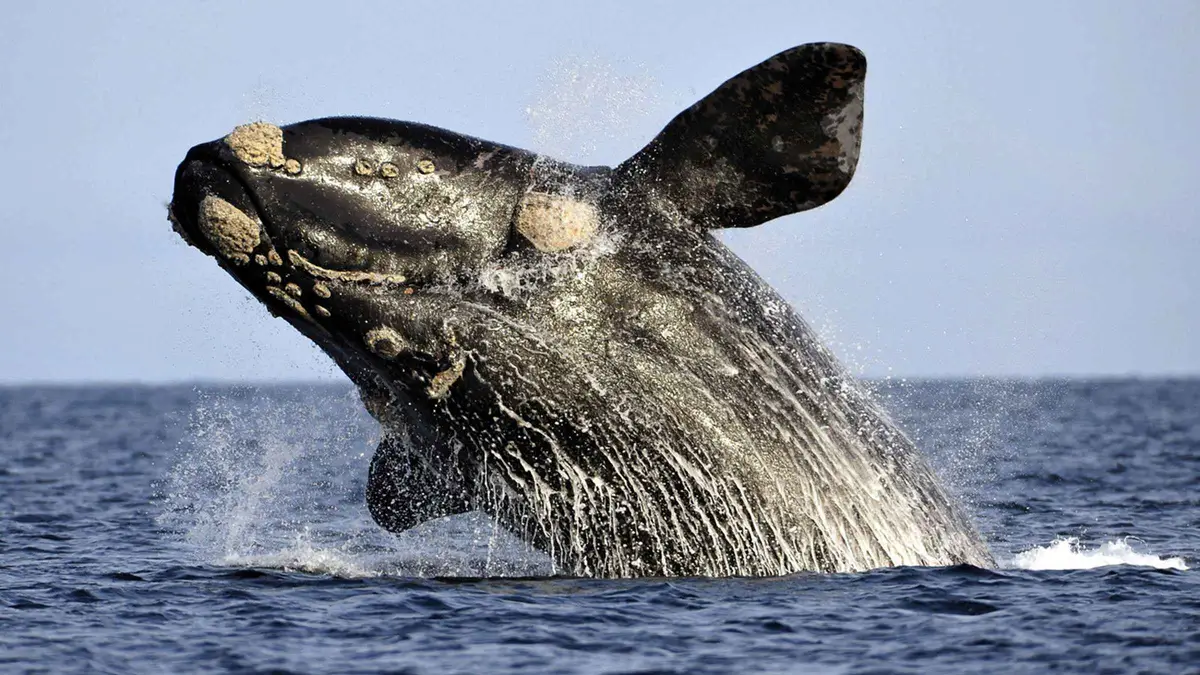
Whales, July to November. Southern right whales arrive at Hermanus from around June–July and the season runs to November, peaking September–November — the town's own tourism authority publishes the calendar, and the operator we track, running since 1999, charges R1,580 for an international adult with a 50%-refund-or-free-repeat policy if no whale shows. Boat-based whale watching here is permit-regulated by the national environment department, which is worth knowing when you compare operators: a permit is a legal requirement, not a marketing badge. From Cape Town, the full-day boat trip with transfers handles the two-hour drive.
Flowers, August to September. The West Coast bloom is reliable enough that West Coast National Park prices it: the international adult fee doubles from R144 ($8.95) to R306 ($19.01) in August and September, on SANParks' own two-tier rates table. That fee structure is the most honest signal in South African tourism — the park itself is telling you when to come. The bloom moves with the winter rains, so late August to mid-September is the percentage play.
Harvest, February to April. The Winelands crush their grapes in late summer — cellar activity, harvest festivals and the year's best light in Stellenbosch and Franschhoek. Estates pour year-round, so this window is a bonus rather than a requirement, but if wine is the trip's spine, February–April is its season.
The case for winter: June to August, honestly
June is the wettest month in the record — 94.1 mm across 10.1 rain days — and July the coolest, with highs of 16.4°C and lows of 9.4°C. That is the honest baseline, and it rules winter out for a beach trip. It rules very little else out.
The mechanics of Cape winter weather matter more than the averages: rain arrives as cold fronts that pass through in a day or two, with clear, still, sharply beautiful days between them. Those between-front days are the best hiking days of the year — cool air, no south-easter, visibility to the horizon — and the mountain advice on the safety page about starting early applies doubly when dark falls before six. Indoors, the city's caliber shows: Zeitz MOCAA charges R265 with under-18s free, the aquarium opens 365 days, and the food scene runs its winter specials precisely because visitor numbers dip.
What winter buys you: the year's lowest accommodation demand (our reading of the season — no official occupancy series is published for free), whale season starting offshore, empty Boulders boardwalks, and a Kirstenbosch that closes an hour earlier (18:00 April–August against 19:00 in summer, per SANBI's own hours) but belongs to you. What it costs you: umbrella days you cannot schedule around, and a Cape Point that can vanish into cloud. If your dates are fixed in July, come anyway and plan flexibly; if you are choosing freely for beaches, don't.
December–January: the peak, and how to survive booking it
South Africa takes its main holiday in its summer, all at once. The national school year ends on 9 December 2026 on the government's own calendar, and from that week until the schools return in mid-January the entire country competes with international visitors for the same beds, restaurant tables and gate slots. Four public holidays land inside the window — 16 December, Christmas, the Day of Goodwill and New Year's Day — each pulling local day-trippers to the same beaches you flew in for.
If December–January is your window, three rules keep it workable. Book accommodation and the marquee experiences first — the Aquila safari day, the whale boats while the season lasts, New Year's tables — and treat the cableway's online ticket (R475 against R530 at the gate, valid 7 days) as day-one business. Second, work the edges of the day: gates like Cape Point's open at 06:00 October–March, and the first two hours beat the convoy. Third, use the wind logic from the section above — December–January is also the windiest stretch, so the flexible, front-loaded itinerary matters most exactly when the crowds are largest.
One caution the operators themselves print: the 2026 cableway maintenance shutdown ran 27 July – 9 August and the rates year runs to 30 June 2027, so the December prices are known and fixed — anyone quoting you a 'holiday surcharge' on the cableway is adding their own.
The cheapest months, from the figures that exist
No official body publishes a monthly price index for Cape Town hotels, so this section reasons only from prices that are published. The gates: West Coast National Park halves its fee outside August–September; SANParks' whole tariff year rolls over on 1 November 2026, with the current Cape Point and Boulders fees fixed until 31 October. The operators: whale boats price the same all season; the cableway's rate card is flat across the year — no summer/winter split on the current cycle, which surprises people who expect European-style seasonal pricing at the gate.
Where season genuinely moves cost is the bed and the flight, and there the low-demand logic is straightforward: May to August, excluding the flower-season weekends, is when the country's own school calendar and the weather suppress demand together. June and July sit at the bottom. September–October buys spring at shoulder demand, and November is the last month before the December surge.
Budget arithmetic for the whole trip — three daily spending profiles built from real gate prices, fares and menus — lives on what a Cape Town trip costs, and the free layer of the city, from the beaches to the museums' free days, is on free things to do.
Sea temperature: the two-ocean truth of it
Cape Town's swimming question has a peer-reviewed answer, and it is not the one the postcards imply. On the False Bay side — Muizenberg, Boulders, Kalk Bay — shelf temperatures rise gradually from 18 to 21°C over the summer, per an Ocean Science study of the bay's coastal gradients. That is genuinely swimmable, and it is why the family beaches and the surf schools cluster on that coast.
The Atlantic seaboard is the trap for the unbriefed. The same study documents the mechanism: the summer south-easter drives upwelling on the Atlantic side, hauling deep cold water to the surface — so the harder the beach weather blows in, the colder Clifton and Camps Bay get. No official temperature series exists for those beaches, and the ~8–16°C range that circulates is folklore, so we print the mechanism and leave the number blank: expect a cold-water shock on the Atlantic side in high summer, and treat those beaches as places to be beautiful rather than places to swim laps.
The practical read: swimmers and families pick False Bay mornings (the south-easter builds through the day); scenery, sundowners and photographs belong to the Atlantic side. The full beach-by-beach comparison is on the beaches hub.
The fixed dates that override the weather logic
A few calendar entries outrank climate averages, in both directions. The Cape Town Cycle Tour (next edition 14 March 2027, per its organiser) and the Two Oceans Marathon week (31 March – 4 April 2027, half on the Saturday, ultra on the Sunday) both land in the weather sweet spot this page recommends — and both close peninsula roads and fill beds for their weekends. If you are not riding or running, shifting a week either side of those dates buys you the same March weather with an emptier peninsula; if you are, the weather argument is already made for you.
Pulling the other way, the Kirstenbosch Summer Sunset Concerts turn every summer Sunday from late November to late March into an event — the 2025–26 season ran 23 November to 29 March on SANBI's own announcement — and the early-January minstrel carnival gives the city's quietest post-New-Year week a reason to be there. All of them, with sources and the honest 'not yet announced' flags where organisers have not published, live on the events calendar.
The planning order that follows: month first from the climate data on this page, then a pass over the events grid before you buy flights — either to catch a fixture deliberately or to sidestep its crowds knowingly. The third pass, gate hours and closed days, belongs to the planning hub.
The best month for you, by what you came for
Beaches and mountain days: February–March. The warmth of high summer, False Bay water at its 18–21°C best, and the south-easter past its December–January speed peak — though still present on more than half of days.
Whales: September–October, the documented peak of a July–November season, with the flower bloom overlapping in early September. This is the pairing that fills the day-trips page.
Wine: February–April for harvest, or any month for the pouring — the Winelands are the least seasonal thing on this site.
Budget: June–July, eyes open about the rain — 89–94 mm a month — and the reward of a city running at local pace.
Photography: April–May or October: low sun, clear air between weather systems, and the mountain without its summer crowds. The tablecloth cloud, if that is the shot you want, is a summer south-easter effect.
First visit, free choice of dates: late February to late March remains our answer, and it is a judgement, labelled as such — the data above is what we built it from. Whatever you pick, the booking order stays the same and it is laid out on the planning hub: beds first in peak season, the weather-hostage tickets flexible and early in the stay, everything else on the ground.
The season-defined bookings
Four cards whose value moves with the calendar: the whale boat for July–November, the flower-season day for August–September, the safari that runs year-round, and the sunrise hike that summer makes possible. Prices and ratings are the platform's own figures, checked in Q3 2026.
 from $221.16
From Cape Town: Hermanus Whale Watching Boat Trip
Boat-based whale watching out of the Hermanus coast with Cape Town hotel transfers, drinks and snacks in the price — you're on the water, not the cliff path. Season peaks June-November.
Check Availability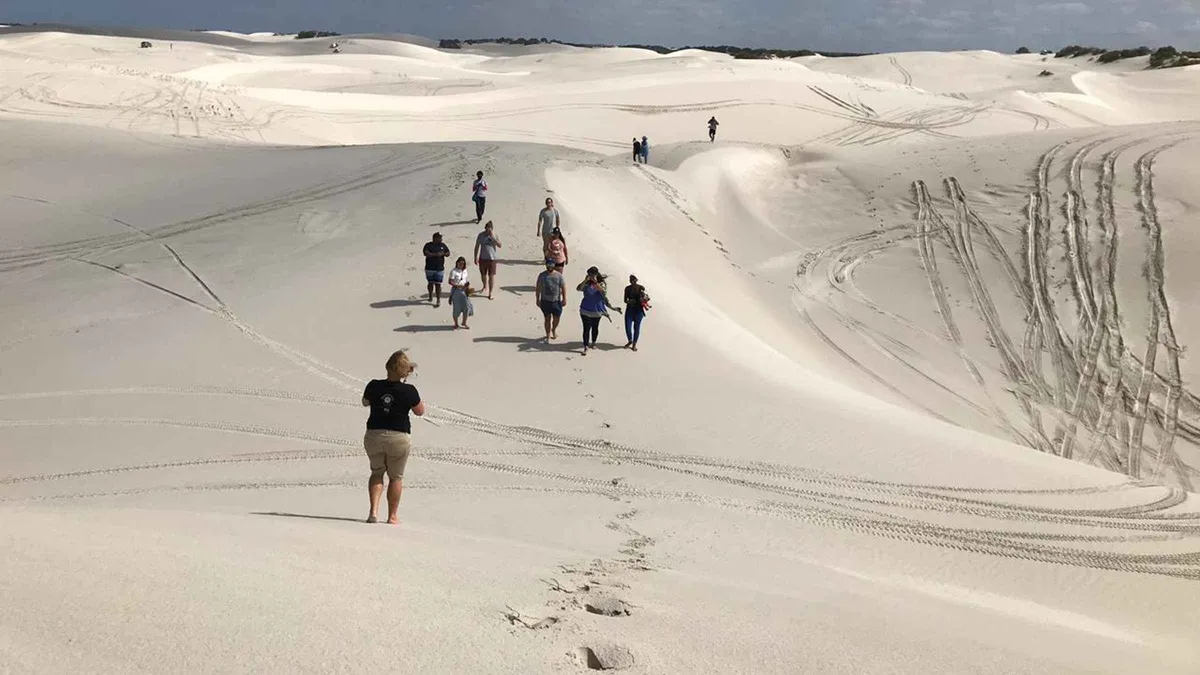 from $137.06
West Coast National Park 1-Day Guided Tour
Full day up the West Coast: park entrance and lunch included, photo stops at Bloubergstrand and the Atlantis Dunes, and a swimmable lagoon in season. August-September wildflowers are the reason to pick this one.
Check Availability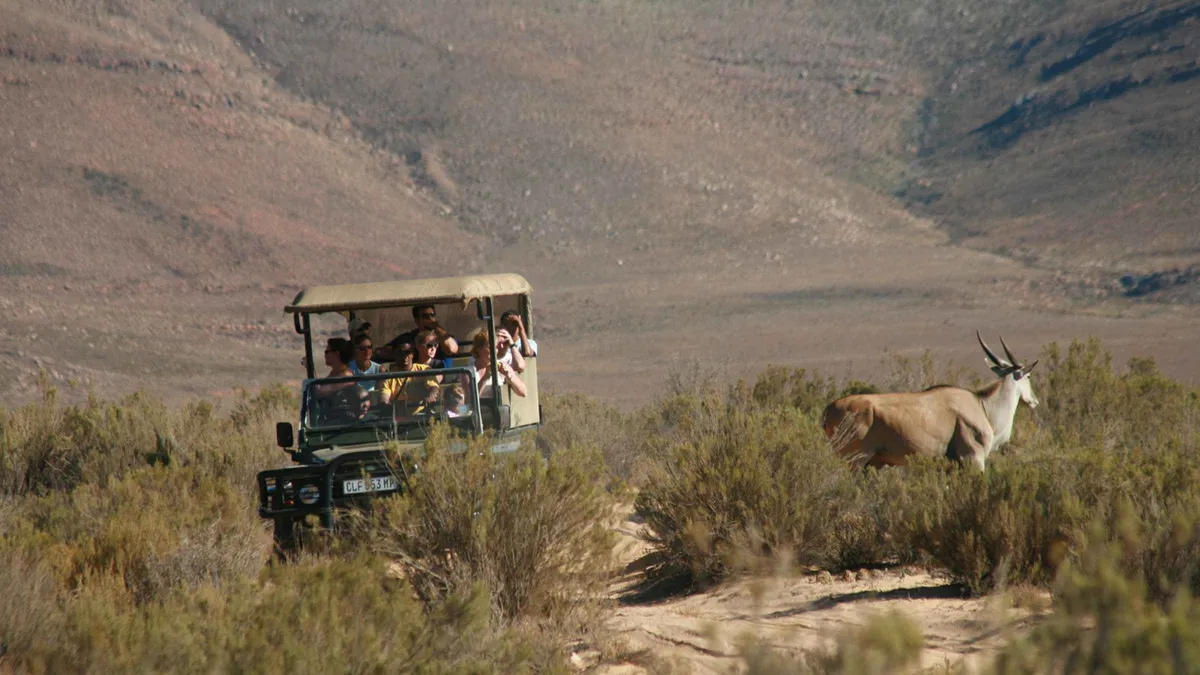 from $236.43
From Cape Town: Aquila Big Five Game Reserve with Options
Aquila Big Five day from Cape Town with reserve entry, open-vehicle game drive and option-dependent meals — from a 5-hour dash to an 11-hour double-drive day. Cancellation closes 3 days out, not 24 hours.
Check Availability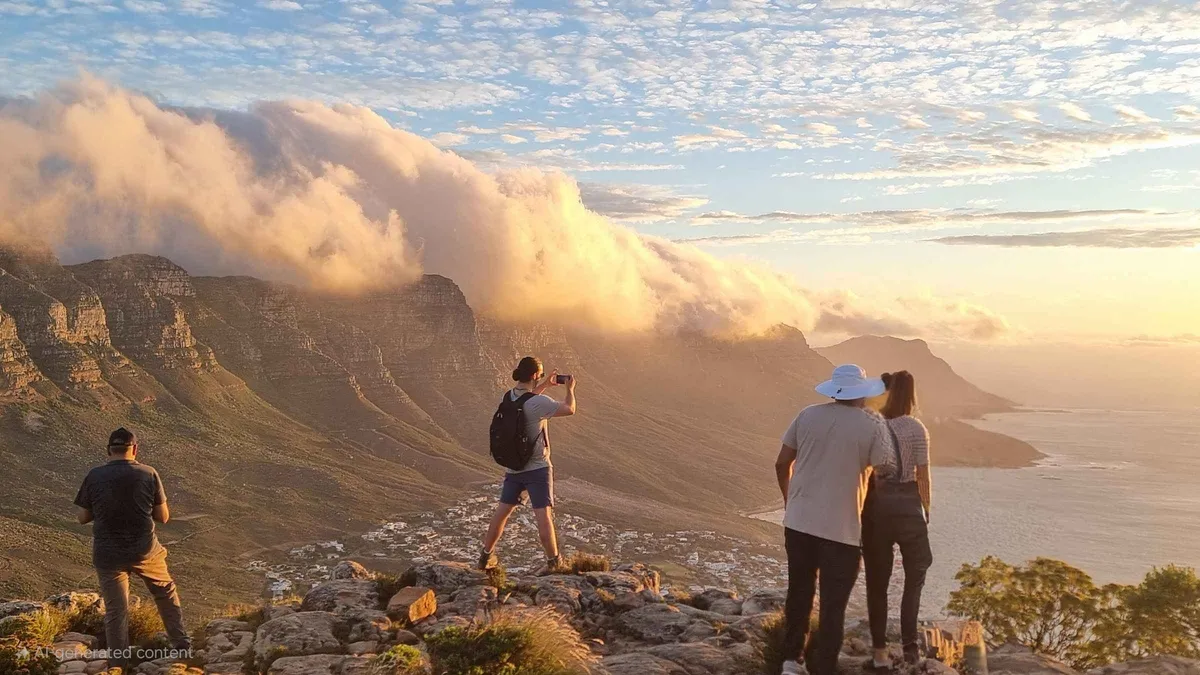 from $44.86
Cape Town: Lion’s Head Sunrise/Sunset hike or Table Mountain
Sunrise or sunset on Lion's Head in a small group with head torches and first-aid kit, 3-3.5 hours. Same operator and format as the Table Mountain hike — pick the peak, not the price.
Check AvailabilityPrices, ratings and details are the platform's own, checked in Q3 2026; dollar figures are the listed prices — the platform bills in your account's currency.
Where to go next
The same data, month by month
All twelve months walked through — what each closes, cancels and rewards: Cape Town weather by month.
The detailed layerThe dates with names on them
The Cycle Tour, the marathon weekend, the Kirstenbosch concert season and the events that fix a trip's dates: the events calendar.
Officially dated onlyTurn the month into a plan
One, three or five days, built from gate hours and real distances: start with the 3-day itinerary or the planning hub.
Slot by slotBest time to visit Cape Town: questions
What is the best month to visit Cape Town?
For classic summer weather with the wind past its worst, February–March; for whales and flowers at shoulder prices, September–October. The thirty-year numbers behind both answers are in the month table, and the reasoning by trip type is in the verdicts.
What is the cheapest time to go to Cape Town?
June–July: the wettest months, the lowest demand, and the one window where even a park fee drops — West Coast National Park charges internationals R144 ($8.95) outside flower season against R306 within it. The published-price evidence is in the cheapest months section.
When is whale season in Cape Town?
July to November, peaking September–November, with the boats running from Hermanus about two hours away — the town's own calendar, not ours. The season's mechanics, permits included, are in the seasonal windows section, and the whale-watching day trip covers the logistics.
Is Cape Town windy in summer?
Emphatically — this is the fact this page exists to deliver. The south-easter is the dominant wind on 51–58% of days from November to March, and mean daily maximum wind speed peaks in December–January. What it closes and how to plan around it is in the wind section.
When is flower season near Cape Town?
August and September — precisely the two months in which West Coast National Park's own gate fee doubles, which is as official as a bloom forecast gets. Late August to mid-September is the percentage play; see the seasonal windows and the guided flower day.
Is December a good time to visit Cape Town?
The weather is glorious and the city is at its fullest: the national school year ends 9 December 2026 and the holiday block runs into mid-January, with four public holidays inside it. It works if you book early and front-load the wind-vulnerable plans — the survival rules are in the peak section.
What is the quietest time to visit Cape Town?
May to early August, by every published signal we can point at: the wet-season weather suppresses demand, the schools are in, and the events calendar goes quiet between the April marathon weekend and the spring windows. June–July sit at the bottom — the trade-offs are laid out honestly in the winter case.
Can you swim in the sea in Cape Town?
Yes on the False Bay side, where the shelf warms from 18 to 21°C over the summer per published oceanography; expect genuinely cold water on the Atlantic beaches, where the summer wind drives upwelling and no official temperature series exists. The two-coast logic is in the sea temperature section.
Cape Town's Seasons on Video
Three clips that show the seasons doing what the data says they do — the summer light, the wind, and the whale-season coast.
Best Time to Visit Cape Town — Sun, Beaches & Whale Watching Guide
Walks the same season trade-offs this page quantifies, coast by coast.
Video: Vibe AdventuresCape Town — Best Time to Visit for Perfect Weather & Scenic Views
The city across its seasons in 4K, useful for judging the light month by month.
Video: BL ImagesBest Time to Visit South Africa (Safari & Beach)
Puts Cape Town's inverted calendar in the context of a wider South Africa trip.
Video: Tailor AfricaVideos load from YouTube only when you press play.
Reviewed Q3 2026 (July–September 2026); next review Q4 2026. Prices, hours and terms are set by the venue or operator and confirmed at checkout.
We may earn a commission if you book through one of our links, at no extra cost to you. Full affiliate disclosure