 Cape Town City Guide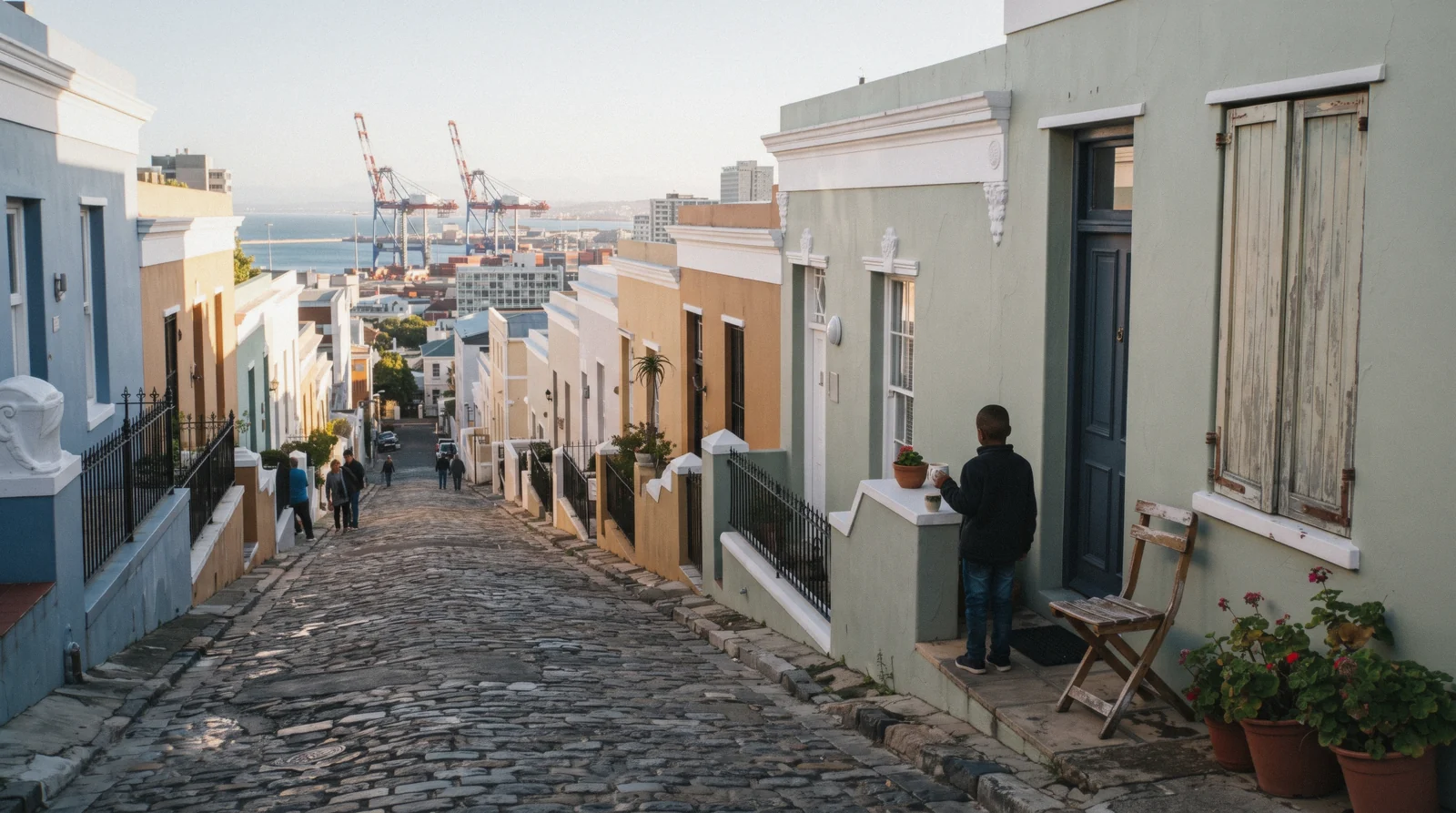
De Waterkant
De Waterkant is Cape Town's restored village quarter: cobbled lanes of pastel Georgian cottages, the Cape Quarter's shops, the city's historic gay village, and a flat fifteen-minute walk to the harbour. This page covers the lanes, the verified trading hours, the distinction from its painted neighbour up the slope and the case for sleeping here - one area page of the Cape Town city guide.
Quick answer What the village is, the Cape Quarter, the distinction that matters
De Waterkant is a pocket of cobbled lanes and restored, brightly painted Georgian cottages on the harbour side of Signal Hill's lower slope - Cape Town's self-styled village, a boutique-hotel, design-shop and cafe quarter that also carries the flag as the city's historic gay village. It sits directly beside Bo-Kaap and grew from the same fabric, but the two are different places today: De Waterkant is a commercial, gentrified quarter you are invited to treat as a set; Bo-Kaap is a living community you are a guest in.
Key takeaways
- Do the pair as one morning: the lanes here, then over Rose Street into the painted quarter with the guided Bo-Kaap and city walk at $40.49 - the guide carries the history and the etiquette both.
- The Cape Quarter at 27 Somerset Road anchors the shopping - weekday hours 9am-6pm in summer, shorter on weekends, full table below - and the V&A Waterfront is a flat 15-minute walk from the village's edge.
- Sleeping here means boutique rooms and Friday-night noise on the Somerset Road side; the trade-offs against quieter bases are on where to stay in Cape Town.
De Waterkant and its neighbour quarter: the distinction, side by side
Visitors constantly blur the two painted quarters on this slope, and the difference decides how you should behave in each. This table is the short version; the full story of the other side is on the Bo-Kaap page. Cape Quarter hours read from capequarter.co.za in Q3 2026.
| Question | De Waterkant | Bo-Kaap |
|---|---|---|
| What it is today | A commercial boutique quarter - design shops, cafes, guesthouses in restored cottages | A living, mostly Muslim residential neighbourhood with a 250-year history |
| Who is behind the doors | Shops, offices, holiday lets and a smaller residential core | About 3,200 residents; family homes, mosques, a madrassah |
| Photography | Shoot freely - the quarter markets itself on its looks | Houses yes, people only with permission, never on private stoops |
| What to do | Browse, eat, drink coffee, walk to the Waterfront | Walk it with a guide, visit the museum (R100 international), eat a koesister |
| When to come | Weekday mornings for the lanes; evenings for Somerset Road | Morning light before the tour groups; daylight generally |
The two quarters meet around Rose and Chiappini Streets - five minutes of gentle slope apart. Historically both grew as the Cape's working waterfront housing; emancipated Muslims, artisans and dock workers lived across the whole slope before the quarters' paths diverged.
Guided from the village's edge
De Waterkant needs no ticket, so these are the experiences that start or eat their way through this side of town. Prices as listed in Q3 2026.
 from $40.49
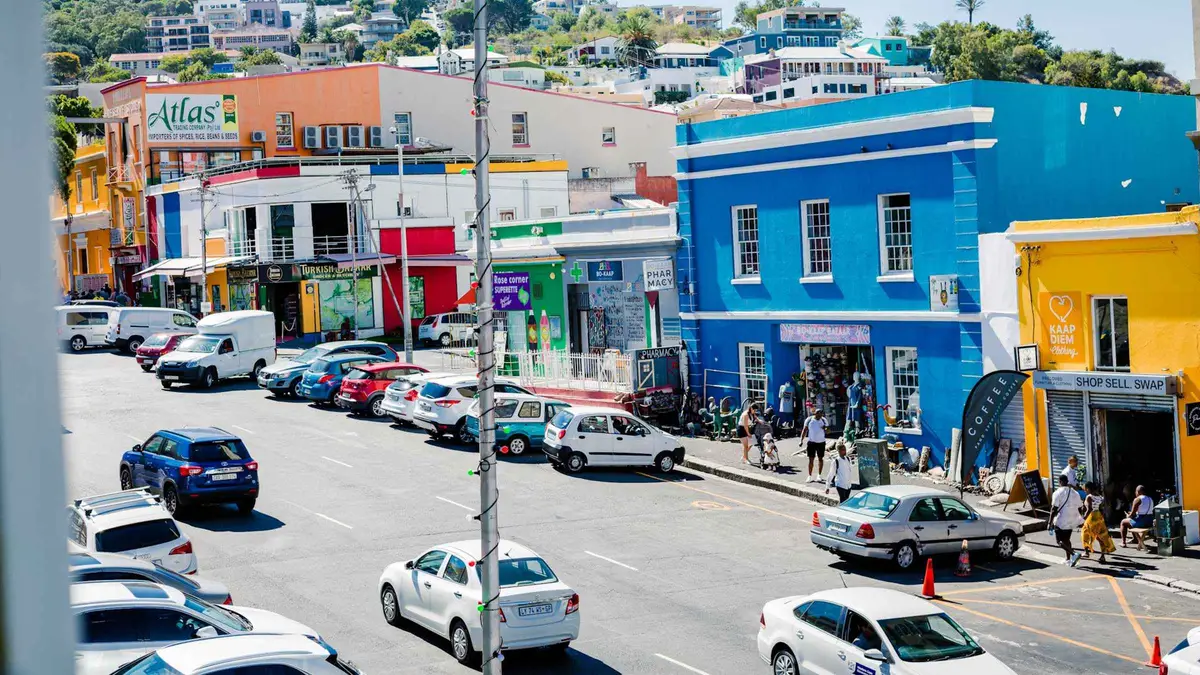
Cape Town Walking Tour: Bo-Kaap & City Highlights
2-hour guided walk through Bo-Kaap and the city landmarks with a snack thrown in, offered in four languages including Xhosa and Afrikaans. Entry fees to any paid sites are your own.
Check Availability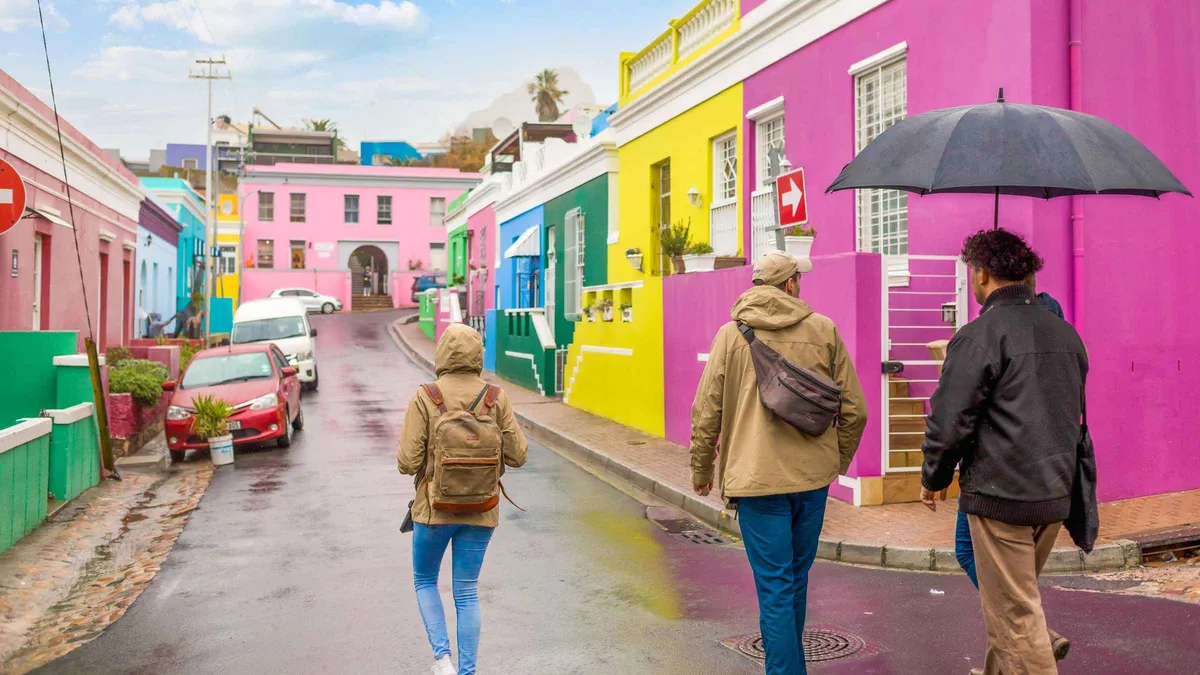 from $141.73
Cape Town: Essential Food and Drink Tour
4-hour walking tasting through Bo-Kaap and the city: 10+ tastings with all drinks poured, wine included. Flag allergies right after booking — and expect two miles on foot.
Check Availability from $62
Cape Town: African Dinner and Interactive Djembe Drumming
Dinner show at GOLD Restaurant: a djembe drumming session at 18:30, then a 14-course African set menu with live entertainment, hotel transfers included and drinks on your own tab.
Check AvailabilityPrices, ratings and details are the platform's own, checked in Q3 2026; dollar figures are the listed prices — the platform bills in your account's currency.
What De Waterkant is: the village that estate agents built twice
The bones are genuinely old: small flat-roofed, shuttered cottages on a tight grid of lanes - Loader, Napier, Waterkant, Dixon - laid out in the late eighteenth and early nineteenth centuries for the artisans, freed slaves and harbour workers of the growing port, the same social fabric that produced Bo-Kaap uphill. The quarter decayed with the docks, dodged the bulldozers that erased District Six, and was rediscovered and restored from the 1980s onward into what it is now: the most complete set of period lanes in the city, painted in pastels and kept photogenic because photogenic is the business model.
The restoration story explains the quarter's texture. Because the cottages were saved by private buyers house by house rather than by a single scheme, the lanes kept their irregularity - no two facades quite match, the paint palette is personal rather than planned, and the odd unrestored house between the polished ones keeps the streetscape honest. The result photographs like a set but reads, on foot, like a real place that happens to be beautiful, which is a rarer thing.
Along the way it became Cape Town's gay village - the bars and clubs of the Somerset Road strip made it the centre of the city's LGBTQ+ nightlife from the 1990s, and it remains the rainbow-flagged heart of queer Cape Town, a fact the quarter wears openly and visitors of every kind will find unremarkable in practice. Today the mix is boutique hotels, design showrooms, coffee, brunch and a walkable sense of being somewhere made for pleasure - which, honestly, it is.
Walking the lanes
The village walks in half an hour and rewards double that. Start where Waterkant Street leaves the traffic behind and take the grid slowly: Loader Street for the longest run of restored cottages, Napier and Dixon for the corners photographers queue for, and the stepped lanes up toward the slope's shoulder for the view back over the harbour cranes. The cottages are at their best in low morning sun, and on a weekday before 10:00 you will have the cobbles largely to yourself.
What you will not find is a museum or a plaque trail - the quarter tells its history through fabric, not signage, and no official register documents individual houses for visitors. Treat it as a walking pleasure rather than a study visit, and take the study visit next door: the Bo-Kaap Museum at 71 Wale Street, ten minutes up the slope, covers the whole hillside's story for R100 ($6.21) international.
The Cape Quarter, and where the village shops
The Cape Quarter Lifestyle Shopping Centre at 27 Somerset Road is the quarter's commercial anchor - a courtyard centre of fashion, homeware, health and food built into and behind the old fabric. Its own published hours, read in Q3 2026: weekdays 9am-6pm in summer and 9am-5pm in winter, Saturdays 9am-4pm, Sundays 9am-3pm, with the in-centre SPAR trading daily 7am-8pm - useful, because that supermarket is the self-caterer's answer for the whole seaboard end of town.
Around it, the village's shopping is design-led and independent: galleries, studios and showrooms scattered through the lanes and along Somerset Road. No citable list ranks them and turnover is real, so this page names the streets and lets the browsing be the point. Coffee and brunch are the quarter's reliable trades - you will not walk five minutes without finding either. Self-caterers staying anywhere on this side of town end up knowing the centre's supermarket by heart; it is the practical anchor under the boutique surface, and open hours that outrun every shop around it.
Evenings: Somerset Road, honestly
After dark the village's energy concentrates on the Somerset Road strip - restaurants, bars and the clubs that made the quarter's nightlife name. Friday and Saturday nights are genuinely loud until late, which cuts both ways: it is the most reliable night out on this side of town, and it is the reason light sleepers should book a room on the inner lanes rather than the strip. Weeknights are far gentler - dinner-and-wine territory.
The African dinner with interactive djembe drumming - a 14-course set menu and a drum in your hands, listed at $62 and rated 4.7 from 742 reviews - sits ten minutes away and makes a better second-night plan than a third restaurant guess. For the eating tour of the wider centre, the four-hour essential food and drink tour at $141.73 threads this side of town with more than ten tastings.
The flat walk to the Waterfront
De Waterkant's most underrated feature is its position: it is the closest characterful quarter to the V&A Waterfront. From the village's lower lanes the walk is about fifteen minutes and dead flat - down across Somerset Road, through the regenerating harbour-edge blocks, and into the precinct near the aquarium end. That makes the village a genuine walking base for the harbour's big tickets: Zeitz MOCAA, the Two Oceans Aquarium and the Robben Island ferry are all within twenty-something minutes of your door, no car involved.
In the other direction, Bo-Kaap begins five minutes up Rose Street and the City Bowl grid is ten minutes beyond it - the village sits in the seam between the city's two halves. After dark, do what residents do on the harbour walk: keep to the lit Somerset Road line or take the five-minute e-hail.
Half a day in the village, timed
The quarter's pleasures are small and sequence well, so here is the half-day that uses them in order - timed to the light, the browse and the fork that decides your afternoon. What the village does not need is a full day; its genius is being twenty excellent minutes from three other full days.
| Time | The move | Why then |
|---|---|---|
| 08:30 | Coffee in the lanes - the village does breakfast better than almost anything else it sells - then the grid: Loader Street's long terrace first, the Napier and Dixon corners after, the stepped lanes up the slope for the harbour view last | Low light, empty cobbles, and your shadow still points at the harbour |
| 10:00 | The browse - the Cape Quarter's courtyards and the independent showrooms along Somerset Road | An hour's worth without trying |
| 11:00 | The fork: up Rose Street into Bo-Kaap for the museum and the painted quarter's history, or down the flat fifteen minutes to the V&A Waterfront for the aquarium, Zeitz MOCAA or an early harbour lunch | Bo-Kaap is the pairing this page keeps recommending - ideally with the guided walk booked for the late morning |
| 13:00 | Lunch, whichever fork you took | You have spent nothing in the village but coffee money and whatever the showrooms extracted |
| 17:00 | The evening version inverts it: golden-hour photographs, dinner on or off Somerset Road, then the strip's bars - or the ten-minute walk back to a bowl hotel | Arrive at golden hour if mornings are not your holiday |
Staying in the village
De Waterkant's rooms are its cottages: boutique guesthouses and self-catering lets in restored houses, small by definition and strong on charm. The case for basing here - walkable Waterfront, the lanes at your door, the best nightlife strip outside the bowl, and the LGBTQ+ traveller's natural first choice in Cape Town - is real; so are the caveats: limited inventory books out early for December-January, parking in the lanes is scarce and mostly arranged through your accommodation, and the Somerset Road side is loud on weekend nights. Ask for an inner-lane room and the village is quiet by 22:30.
The comparison against Green Point's convenience and the bowl's walk-to-museums case is laid out on where to stay in Cape Town.
De Waterkant on the map
Red pins are the village itself; teal pins are its edges - note how the quarter sits in the seam between Bo-Kaap's slope and the harbour. Everything on this map is within fifteen flat minutes.
From the village, in every direction
Bo-Kaap
The living painted quarter up the slope - with the history, the museum and the etiquette that this village's prettiness can make easy to forget: the Bo-Kaap page.
5 minutes via Rose StreetThe V&A Waterfront
The harbour's museums, ferry and food halls, reached on foot from here faster than from any hotel district: the Waterfront page.
15 minutes, flatThe City Bowl
The museum mile, Kloof Street and the grid - the other half of a De Waterkant base's walking range: the City Bowl page.
10-15 minutesRooms in the lanes
Small quarter, small inventory - the village's guesthouses fill months out for December and January. Check live rates for your dates; the whole-city comparison is on where to stay in Cape Town.
De Waterkant village
- Walk to the V&A Waterfront
- About 15 minutes, flat
- Suits
- Design-minded couples, LGBTQ+ travellers, anyone who wants character plus walkability
Boutique cottages on cobbled lanes with the harbour and the bowl both in walking range. Book an inner-lane room unless you plan to be part of Somerset Road's Friday night rather than adjacent to it.
See stays in De WaterkantWe take a commission if you book through this link, at no extra cost to you.
De Waterkant: questions
What is De Waterkant famous for?
Its restored Georgian cottages on cobbled lanes - the most complete period streetscape in Cape Town - plus its role as the city's historic gay village and its boutique shopping around the Cape Quarter. It is the city's prettiest commercial quarter, made for wandering, eating and photographing.
Is De Waterkant the same as the painted quarter next door?
No, and the difference matters: De Waterkant is a gentrified boutique quarter that invites cameras; its neighbour up the slope is a living, mostly Muslim residential community where photography etiquette applies. They share historical roots and a five-minute walk - the comparison table puts them side by side.
Is it safe to walk around De Waterkant?
By day it is one of the easiest quarters in the city - compact, busy and commercial. At night keep to the lit Somerset Road line or the populated lanes, and use a short e-hail for the harbour or the bowl, the same habits set out on the safety page.
Can you walk from De Waterkant to the V&A Waterfront?
Yes - about fifteen flat minutes from the lower lanes to the precinct's near end, which makes the village the closest characterful base to the harbour's aquarium, museum and ferry. After dark, take the lit main-road line or a five-minute e-hail.
What are the Cape Quarter's opening hours?
From the centre's own site, read in Q3 2026: weekdays 9am-6pm in summer and 9am-5pm in winter, Saturdays 9am-4pm, Sundays 9am-3pm; the in-centre SPAR runs daily 7am-8pm and the address is 27 Somerset Road.
Is De Waterkant good for LGBTQ+ travellers?
It is the city's historic gay village and its most rainbow-flagged quarter - the Somerset Road strip has anchored Cape Town's LGBTQ+ nightlife since the 1990s, and the village's guesthouses have decades of practice as the community's first booking. Visitors of every kind will find the quarter simply friendly; for queer travellers it is the obvious first base in the city.
Where do you park in De Waterkant?
The lanes themselves offer almost nothing - they predate the car by a century. The Cape Quarter has centre parking during trading hours, and accommodation in the village usually arranges a bay; ask when you book rather than trusting the streets, especially in December.
De Waterkant on Video
The village at walking pace, the rainbow-flag identity, and the stay-here question tested against a rival quarter.
Walk around De Waterkant - Cape Town's rainbow village
The lanes, the flags and the cottages in one continuous point-of-view walk.
Video: Roam Around Cape TownWhere to stay in Cape Town: Sea Point or De Waterkant?
The base-choice argument, tested by staying in both - the same trade-offs this page's sleeping section weighs.
Video: James And Rob4K Walk on De Waterkant
The quarter's grid and its harbour views at street level.
Video: TRAVEL LENSVideos load from YouTube only when you press play.
Reviewed Q3 2026 (July–September 2026); next review Q4 2026. Prices, hours and terms are set by the venue or operator and confirmed at checkout.
We may earn a commission if you book through one of our links, at no extra cost to you. Full affiliate disclosure